




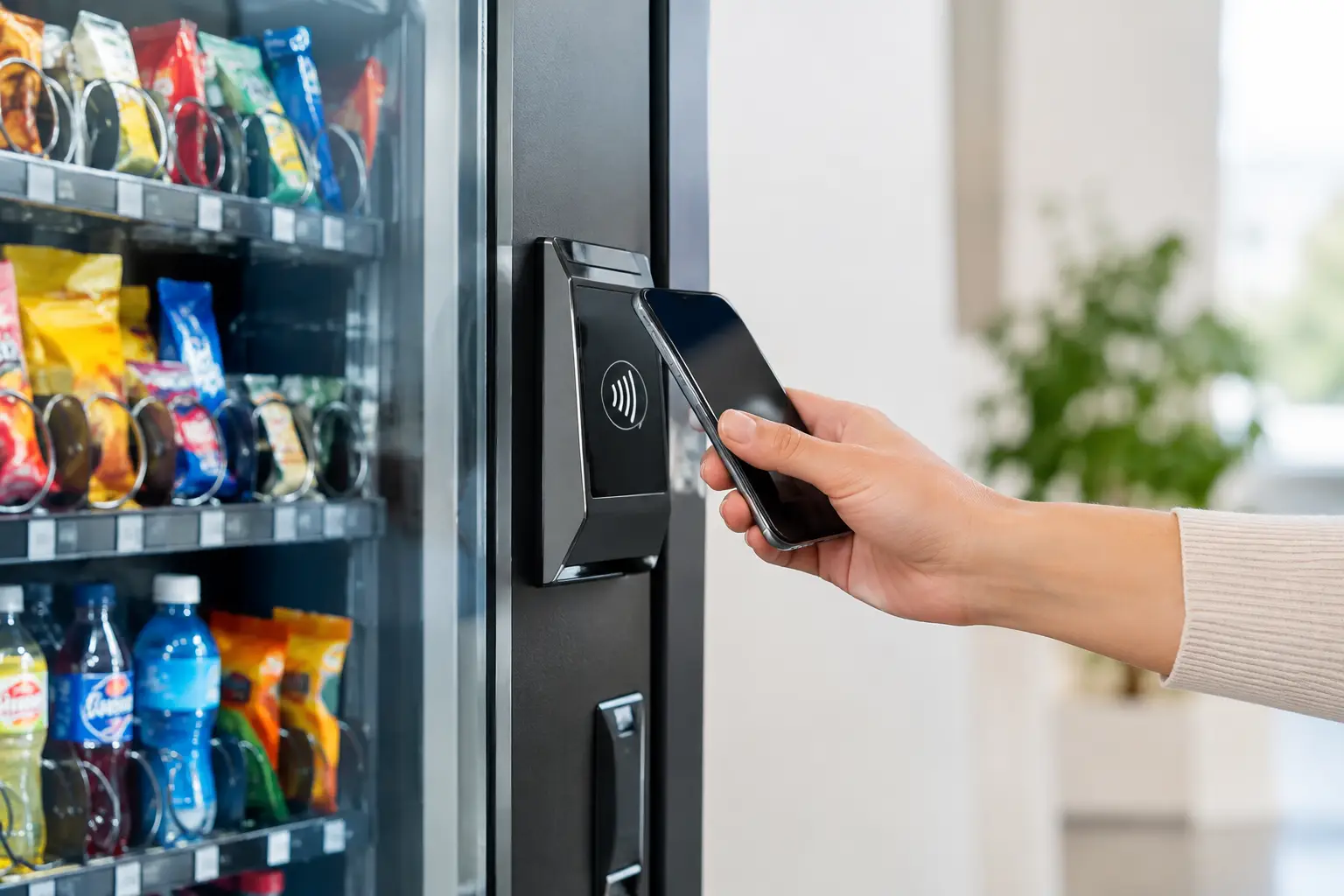
A customer arrives at a vending machine after a workout, between meetings or while waiting in a lobby. They may have no notes or coins at all. If the machine accepts only cash, that sale can end before the customer has even chosen a product. Cashless payments turn that missed opportunity into a quick, familiar purchase – and give operators a clearer view of how the machine is performing.
For businesses running vending machines, micro markets or self-service retail points, payment choice is not simply a technical extra. It affects sales volume, machine uptime, cash handling, customer confidence and the time needed to manage each location. The right setup should make buying easy while remaining practical to maintain.
Why cashless payments matter for vending operators
Cash remains useful in some locations, but consumer behaviour has changed. Many customers now expect to pay by contactless card, mobile wallet, QR payment or e-wallet. This is particularly true in offices, gyms, shopping centres, universities, hospitals and transport-related locations, where speed matters and customers may not be carrying cash.
A cashless-enabled vending machine removes a common reason for abandoned purchases. It also allows customers to buy higher-value products more comfortably. A cold drink is one thing; a premium coffee, healthy meal, frozen food item or bundled snack purchase is easier to justify when payment takes seconds and no change is required.
For operators, the benefit extends beyond convenience. Every cash transaction creates work: collecting money, counting it, checking for shortages, preparing change and managing the risk of loss. Digital transactions create a recorded trail, making it easier to reconcile takings and understand performance by machine, product and site.
That does not mean every site should become cash-free immediately. Locations with customers who strongly rely on notes and coins may still benefit from a combined payment setup. The commercial question is straightforward: what payment methods will help the greatest number of people complete a purchase at this location?
The payment methods worth considering
The most suitable mix depends on your audience, machine type and site. A busy office building may require card and mobile wallet acceptance. A public-facing location may benefit from card, QR and cash options. The aim is not to add every possible method without a plan; it is to provide the methods customers genuinely use.
Contactless card and mobile wallet payments
Contactless card payments are often the foundation of a modern vending setup. Customers recognise the process immediately: select an item, tap a card or phone, then collect the product. Mobile wallets offer the same familiar experience for customers who use their smartphone or smartwatch rather than a physical card.
For higher-traffic sites, this speed can reduce queues around coffee machines, hot food machines and micro markets. It also supports impulse purchases, which are valuable when products are placed in high-footfall areas.
QR and e-wallet payments
QR payments and e-wallets can be highly relevant where they are widely used by local customers. They can offer an accessible option for people who do not regularly use cards, while giving operators another route to completed sales.
However, the customer journey must be simple. A code that is difficult to scan, an unclear instruction screen or a slow confirmation process will frustrate buyers. The machine interface should clearly show the payment steps and confirm when payment has been received.
Cash alongside digital payment
Keeping a note and coin mechanism can be sensible in selected locations, particularly where customer habits are mixed. This approach gives buyers choice, but it also retains the operational effort of cash collection and change management.
Before choosing a hybrid setup, consider whether the extra sales from cash users justify that ongoing work. In a controlled office or premium commercial site, cashless-only may be more efficient. In a public location with broad customer demographics, accepting both may protect revenue.
What a reliable cashless vending setup needs
A payment terminal alone is not the full solution. Reliable cashless vending depends on the connection between the terminal, machine controller, product delivery system and network. When these parts are properly specified and supported, transactions are fast and operators can manage issues with less disruption.
Connectivity is central. A weak or unstable signal can lead to failed authorisations, delayed payments or customer uncertainty. Before installation, assess the site’s mobile network coverage or available internet connection. Basements, enclosed lobbies and remote sites may need additional planning to maintain dependable communication.
The machine must also confirm that the product has been delivered correctly. If a payment is approved but an item does not dispense, the operator needs a clear process for resolving the issue. Modern vending systems can record transaction details and machine events, making it easier to identify whether the problem relates to stock, a jam, a motor or payment communication.
Remote monitoring adds another operational advantage. Instead of relying only on physical visits, operators can review stock levels, sales patterns, machine alerts and payment activity from a distance. This helps teams refill best-selling products sooner, schedule visits more efficiently and respond before a minor fault becomes a lost-sales problem.
The costs to assess before choosing cashless payments
Cashless payment systems can increase sales and reduce manual work, but they are not cost-free. A sensible investment decision should include the payment terminal, installation, data connectivity, transaction charges and any platform or support fees.
Transaction fees are often the first concern for new operators. Rather than looking at the fee in isolation, compare it with the value of sales that may otherwise be lost. A machine that accepts only cash may avoid card charges, but it can also lose purchases from customers who cannot or do not want to pay with cash.
Machine pricing should also be considered over the life of the equipment. Selecting a cheaper terminal or unsupported integration can create higher costs later through downtime, difficult repairs or limited compatibility. Payment technology should be chosen with service availability in mind, including replacement parts, technical support and the ability to update the setup when customer behaviour changes.
There is also a settlement timetable to understand. Operators need to know when transaction funds reach their account, how refunds are handled and how payment records will be matched with machine sales data. Clear reporting makes day-to-day financial management far easier, especially across several machines or locations.
Improving sales after installation
Installing cashless capability is only the starting point. The machine should make payment acceptance visible before the customer begins browsing. Clear card, contactless, QR or e-wallet signage reassures people that they can buy without cash.
Product range matters too. Cashless payments can support a wider price range, so review whether the machine is stocked only with low-cost snacks or whether the location could support premium drinks, healthier food, fresh meals, coffee or convenient essentials. Sales data will show which price points and products customers actually choose.
Location remains the deciding factor. A well-equipped machine placed in a low-footfall corner will not deliver the same return as one positioned where customers naturally pause. Entrances, reception areas, staff break spaces, gym exits, waiting zones and shared commercial spaces can all work well when the product offer matches the people using the site.
Operators should also check machines regularly even when remote monitoring is available. Clean screens, working payment readers, clear product displays and reliable dispensing all influence repeat purchases. Customers forgive a single delay more readily than a machine that repeatedly appears unavailable.
Choosing a supplier that can support the full operation
For first-time vending investors, payment compatibility can feel like one more technical decision among many. The practical answer is to work with a supplier that understands both the machine and the operation around it. Equipment selection, payment integration, site suitability, installation, warranty, spare parts and repair response all affect whether a vending business remains profitable after launch.
KCH Vending supports businesses with vending equipment and the operational services needed to keep self-service retail running. This matters because a payment issue is rarely just a payment issue: it can involve connectivity, machine settings, product delivery or an on-site condition that needs prompt attention.
The best cashless arrangement is the one your customers will use confidently, your team can manage efficiently and your supplier can support when problems arise. Start with the habits of the people at your site, then choose a payment setup that gives them every practical reason to make a purchase.