




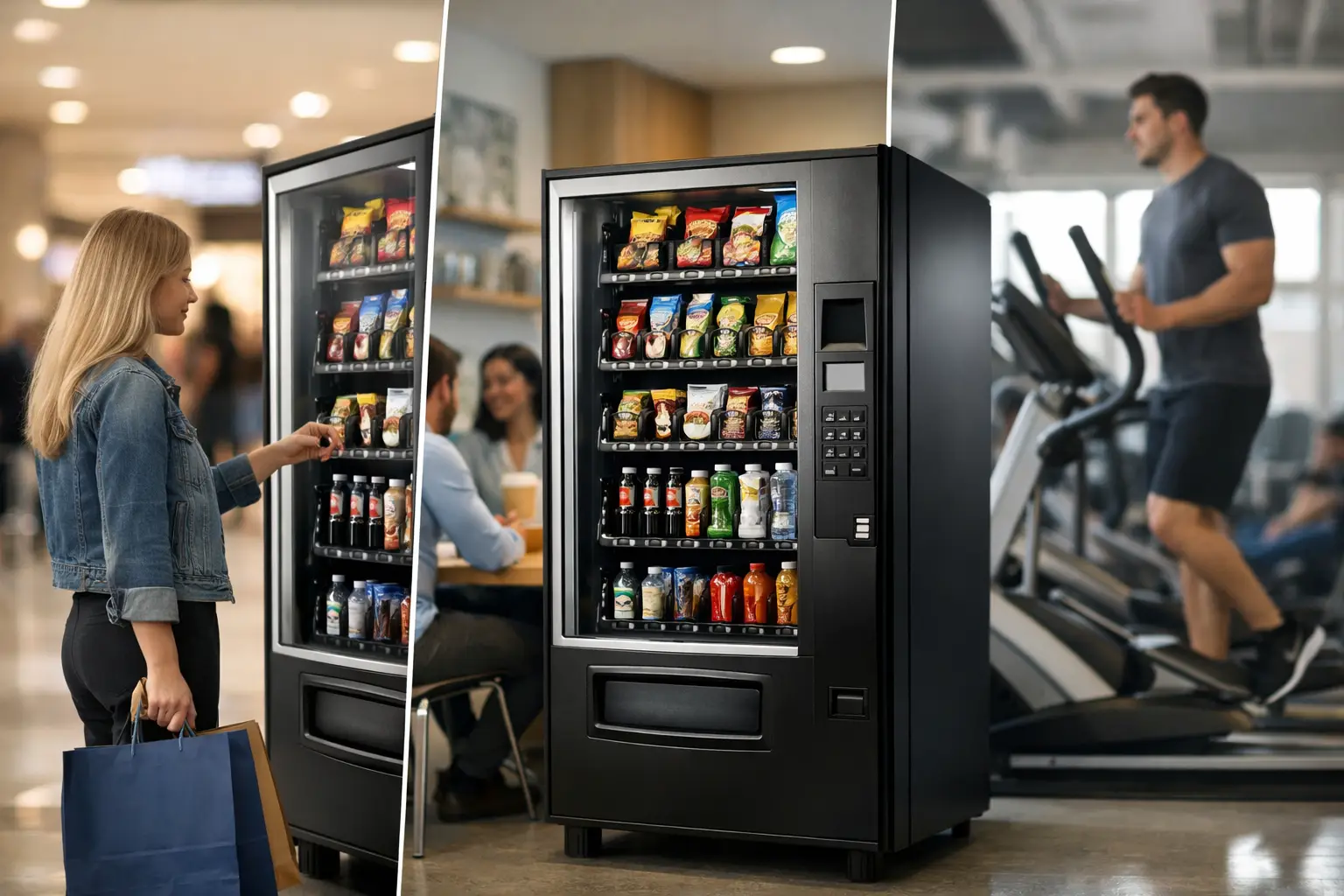
A vending machine placed in the wrong spot can sit idle for months, even if the machine itself is modern, cashless, and well stocked. The best vending machine locations are not simply the busiest places on paper. They are the places where footfall, waiting time, product fit, and ease of access come together to create repeat purchases.
That distinction matters for any business owner or first-time vending investor. A machine is only as profitable as its placement strategy. If you want dependable sales, the goal is not to chase traffic alone. It is to identify where people are likely to buy, what they are likely to buy, and how easily you can keep the machine operating without disruption.
What makes the best vending machine locations?
The strongest locations usually share a few commercial traits. They have regular human traffic rather than occasional spikes. They also have people who are either waiting, working, commuting, or spending extended time on site. A person walking quickly through a lobby may not stop. A person waiting ten minutes for transport, finishing a gym session, or working a long shift is far more likely to make a purchase.
The second factor is convenience. If the machine is hidden in a corner, tucked behind a pillar, or installed in an area with poor lighting, sales will suffer. Good placement means visibility, easy access, and enough space for people to approach the machine comfortably.
Product-market fit matters just as much. A snack and beverage machine may perform well in a factory, office block, or student accommodation. A coffee machine may do better in a workplace, transport hub, or co-working space. Frozen food, hot food, or healthy vending can outperform traditional snacks in locations where people want a practical meal rather than an impulse purchase. The location should shape the machine type, not the other way round.
Best vending machine locations for reliable sales
Offices and commercial buildings
Office environments remain one of the most dependable choices, especially where staff work long hours or where there is limited access to nearby food outlets. Employees tend to buy repeatedly if the machine is placed in a pantry area, lobby, or break zone with regular traffic.
This type of site works best when products match working routines. Coffee, chilled drinks, light meals, and snacks tend to perform consistently. In larger buildings, cashless payment is almost essential because staff expect quick and easy transactions. Remote monitoring also helps because stock levels can be tracked without unnecessary site visits.
Factories and industrial sites
Factories can be among the highest-performing locations because they combine shift work, restricted movement, and a practical need for convenience. Workers may not have time to leave the premises, which makes on-site vending a strong solution.
These sites often suit snack, beverage, coffee, and hot food vending. The main advantage is repeat usage. The trade-off is that restocking and servicing need to be planned carefully around access rules, safety procedures, and operating hours.
Gyms and fitness centres
Gyms offer good vending potential when the product range is targeted properly. Water, sports drinks, protein beverages, healthy snacks, and ready-to-go functional food can all work well. Members are already in a buying mindset linked to health, energy, and recovery.
Not every gym is equal, though. A small boutique studio with low daily traffic may not deliver enough volume. A larger gym with long opening hours, strong membership retention, and limited nearby retail options is usually a better commercial fit.
Hospitals and medical centres
Healthcare sites generate steady foot traffic from staff, visitors, outpatients, and carers. They also have one key characteristic that many profitable vending sites share: waiting time. When people are waiting for appointments, visiting hours, or transport, convenience purchases increase.
Hospitals are especially suitable for beverage machines, snack machines, coffee machines, and healthier food options. Site rules can be stricter, and approval processes may take longer, but the demand profile is often stable. In many cases, reliability and quick maintenance support matter more here than in simpler locations.
Universities, colleges, and student accommodation
Student-heavy sites can produce very strong sales because usage is frequent and price sensitivity is balanced by convenience. Students often buy late in the day, between classes, or during study sessions, so vending can meet a genuine daily need.
This location type suits snacks, drinks, coffee, and even book vending or micro market concepts depending on the setting. The challenge is that preferences can change quickly, so product mix should be reviewed regularly. What sells well in one semester may slow down in the next.
Transport hubs and waiting areas
Bus terminals, train stations, ferry points, and large waiting areas are classic vending environments for a reason. People are in transit, they have limited time, and they often want a quick purchase without queueing.
These can be some of the best vending machine locations if the machine is positioned where passengers naturally pause rather than where they rush past. Visibility is critical. If people need to go out of their way to find the machine, sales usually drop.
Residential flats and serviced accommodation
Residential sites are often overlooked by first-time operators, yet they can work very well, especially in larger developments. Residents value convenience late at night, during weekends, or when nearby shops are closed.
Here, success depends heavily on tenant profile and site size. A building with a high population and limited nearby retail will usually outperform a smaller property in a well-served neighbourhood. Machines offering drinks, snacks, frozen meals, or essential items can perform steadily in the right setting.
Locations that look busy but often underperform
Some sites appear attractive because they have visible footfall, but that does not always convert into sales. Shopping malls are a common example. Traffic may be high, yet customers already have many retail and food choices around them. Unless the machine fills a specific gap, it can struggle.
Street-facing placements can also be unpredictable. Public access sounds appealing, but outdoor exposure, power constraints, security concerns, vandalism risk, and inconsistent buying patterns can reduce returns. High traffic is useful only when the environment supports easy purchase and reliable operation.
Even within a good venue, the wrong micro-location can hurt performance. A machine near an entrance may attract attention but not enough dwell time. A machine near seating, lifts, waiting zones, or break areas often performs better because people have a reason to pause.
How to assess a location before you commit
A practical site assessment should start with simple questions. How many people pass through daily, and how many of them are there regularly? Are they workers, students, visitors, commuters, or residents? Do they stay long enough to notice the machine and make a purchase?
Next, look at competition. If there is already a convenience shop, café, or multiple vending machines within a few steps, your machine needs a clear advantage. That might be better product choice, longer availability, healthier options, hot food, or simpler cashless payment.
Then consider operations. Can your team access the site easily for restocking and repairs? Is there reliable power? Is the machine secure? Does the property management support the installation and understand the commercial arrangement? A promising location can still become costly if access is difficult or downtime is hard to manage.
For many operators, this is where supplier guidance makes a real difference. KCH Vending supports customers not only with equipment, but also with practical input on site suitability, machine type, payment setup, monitoring, and after-sales response. That reduces one of the biggest risks in vending: placing the wrong machine in the wrong place and discovering the issue too late.
Matching the machine to the location
The best results usually come from pairing location and machine type with care. A coffee machine in a busy office can outperform a snack machine in the same building. A frozen food machine may work in a residential property where late-night meal access is limited. A micro market may make more sense than a traditional machine in a large workplace with enough staff volume.
This is why a one-size-fits-all approach rarely works. A profitable vending business is built on local demand patterns, practical servicing, and the right product format for the people using the site. Technology helps, especially with card payments and remote monitoring, but it does not replace smart placement.
The best site is usually the one that gives people a simple reason to buy again tomorrow, not just today. If a location offers that kind of repeat demand, it is worth serious attention.