




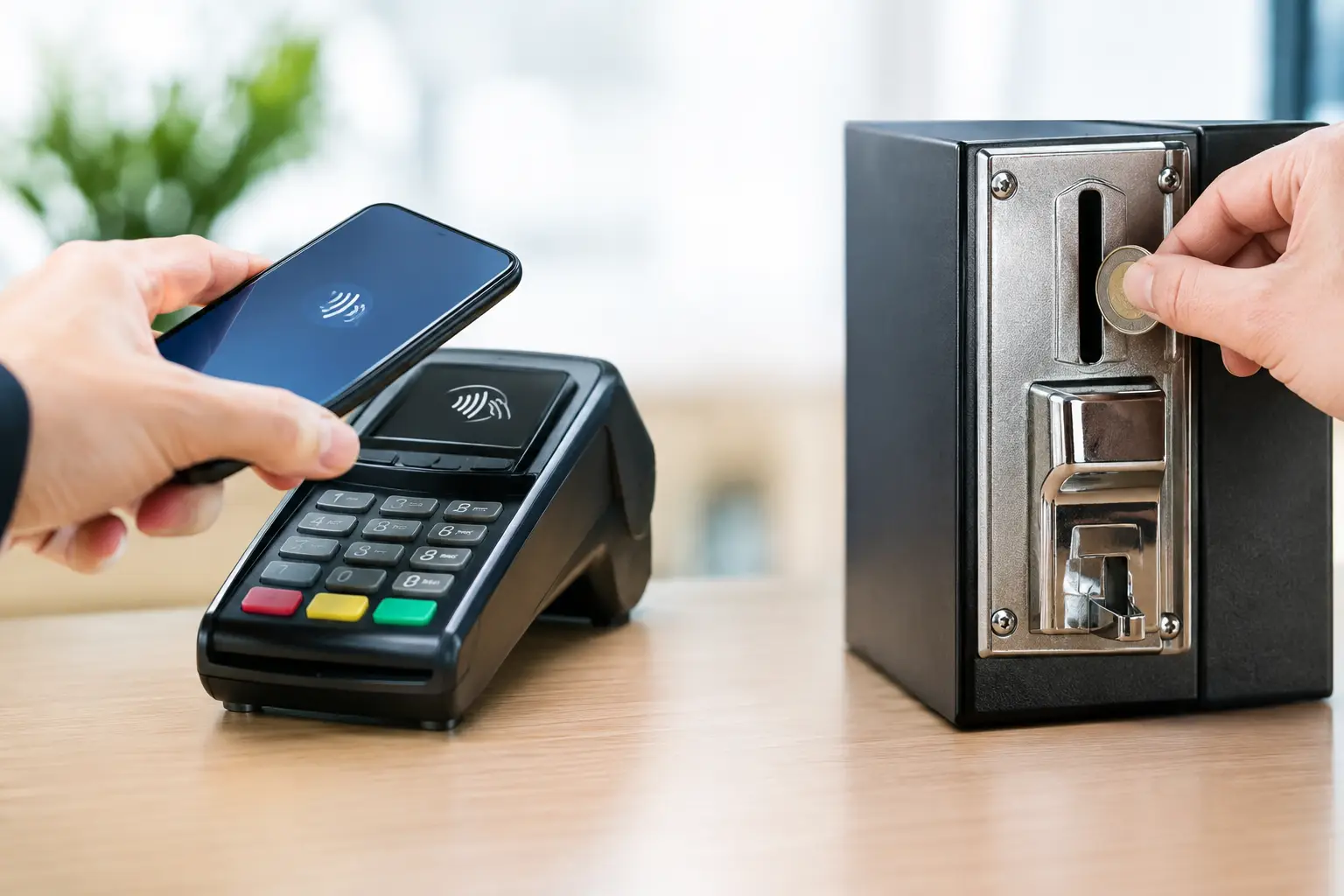
A customer reaches a vending machine after a gym session, between meetings or while waiting at a transport hub. They see a drink they want, but they have no coins. That small moment is where cashless versus coin vending becomes a commercial decision, not simply a machine specification. The payment options you offer can affect completed sales, customer satisfaction, cash handling and the long-term workload behind your vending operation.
For most modern commercial sites in Malaysia, cashless payment is becoming the expected route. Yet coin acceptance still has a role in certain locations and customer groups. The right choice depends on who uses the machine, what they buy, how often the site is staffed and how you plan to manage the operation.
Cashless versus coin vending: the practical difference
Coin vending relies on physical currency inserted into the machine. It is familiar, straightforward and does not require a customer to own a bank card, smartphone or e-wallet. A coin mechanism can be a sensible inclusion where cash remains common, particularly in locations with highly price-sensitive customers or limited digital payment use.
Cashless vending allows customers to pay by contactless card, mobile wallet, QR payment or other supported digital methods. For a busy office, shopping centre, university, private hospital, gym or modern retail setting, this removes a frequent barrier to purchase: customers no longer need to look for change before buying.
The difference is also operational. Coins must be collected, counted, secured and replenished as change. Cashless transactions are recorded digitally, which gives operators a clearer view of sales patterns and reduces exposure to cash shortages, coin jams and manual reconciliation.
Neither method is automatically right for every machine. A frozen food vending machine in a premium office tower may benefit strongly from cashless payments because its products carry higher prices and its users are likely to pay digitally. A low-cost snack machine in a setting where customers routinely carry coins may still need coin acceptance to avoid excluding buyers.
Why cashless vending often produces more sales
Vending is an impulse-led retail channel. If payment feels inconvenient, the sale can disappear in seconds. Cashless systems shorten the decision from “Do I have enough change?” to “Tap and collect”. That matters where customers are rushing, carrying bags, finishing a workout or buying for colleagues.
Cashless payment can also support a wider product range. Operators are more comfortable offering premium coffee, healthier meals, frozen products and higher-value bundles when customers are not limited by the coins in their pocket. This can improve average transaction value, not only transaction volume.
For property operators, the customer experience matters as much as the individual sale. A card-enabled machine feels more aligned with a professionally managed site. It gives tenants, visitors and staff a convenient retail option without requiring an on-site cashier. For businesses using custom-branded vending machines, digital payment also supports a more modern presentation of the brand.
Digital transaction records provide another commercial advantage. When integrated with remote monitoring, payment data can help identify which products perform best, which times of day are busiest and when a machine may need replenishment. Rather than relying only on physical collections to judge performance, an operator can make stocking decisions using current sales information.
There are costs to consider. Cashless systems require compatible hardware, connectivity and payment processing arrangements. Transaction fees may apply, so operators should include them when setting product prices and forecasting margins. At a weak-performing location, fees alone will not solve poor demand. Good placement, relevant products and dependable machine uptime remain the foundation of profitability.
The value of coin payments is not zero
It would be a mistake to treat coins as obsolete everywhere. Some customers prefer cash because it helps them control spending, and some locations still have regular demand for it. Coin vending also provides a useful fallback if a customer’s phone battery is flat, their card is unavailable or mobile coverage is disrupted.
For lower-priced products, coins can remain practical. A machine selling small snacks, bottled water or simple pantry items may see steady coin use in the right environment. Cash acceptance can also make a vending machine more inclusive for school-age users, older customers and visitors who do not use digital wallets.
The issue is not whether coins work. They do. The question is whether the income from coin-paying customers justifies the extra collection, reconciliation and maintenance work for your particular site.
The operating costs behind each payment method
The visible sale is only one part of vending profitability. Coin machines create a physical cash cycle: staff must remove money securely, count it accurately, prepare float where change is given and investigate discrepancies. If a machine is installed across town or in another state, these visits can quickly add time and cost.
Coin mechanisms are also moving parts. Dirt, worn components, damaged coins and coin jams can interrupt sales. Regular servicing and access to spare parts are valuable because a machine that cannot accept payment is a machine that cannot generate revenue.
Cashless systems reduce the need for cash collection, but they introduce their own dependencies. The payment terminal must remain connected, configured and supported. Operators need a supplier that can help diagnose whether a failed sale comes from the machine, payment reader, network connection or a product delivery issue. This is especially relevant for first-time investors who do not have an in-house technical team.
A well-planned machine can offer both options. Hybrid coin and cashless vending protects access for more customers while allowing most sales to be handled digitally. It may be the most practical choice for mixed-use locations, such as community facilities, public waiting areas or large premises with varied demographics.
Match payment choice to the location
The strongest vending installations are designed around the site, not selected from a catalogue alone. Before choosing payment options, look at the footfall, customer profile, typical dwell time, product price points and availability of reliable connectivity.
Cashless-first vending is usually a strong fit for corporate offices, co-working spaces, gyms, shopping centres, private healthcare facilities, universities, cafés and transport-oriented locations. These customers often expect tap-and-go payment and may be buying drinks, coffee, meals or premium snacks while short on time.
Coin or hybrid vending may be more suitable for staff canteens, industrial sites, community venues, budget-led locations or sites serving a broad mix of users. If the products are low-priced and users regularly pay with cash, removing coin acceptance could leave money on the table.
Product type changes the calculation too. A hot food or frozen food machine needs reliable payment acceptance because customers are making a more considered purchase at a higher value. A simple beverage machine may tolerate a greater share of coin transactions. In both cases, a touchscreen interface can help customers see product details and payment instructions clearly, reducing abandoned purchases.
Ask these questions before ordering
A payment decision becomes clearer when you can answer four practical questions:
- Do your main customers commonly use contactless cards, e-wallets or QR payments?
- What is the average selling price, and will customers need coins to complete the purchase?
- Who will collect cash, refill change and respond if the coin system jams?
- Does the location have dependable connectivity for a cashless terminal and remote monitoring?
If the answer to the third question is unclear, cashless or hybrid payment deserves serious consideration. Many operators underestimate the ongoing effort of cash handling until they have several machines in different locations.
Build reliability into the decision
Payment technology should not be treated as an add-on after the machine has been chosen. It needs to be compatible with the machine controller, suitable for the products sold and backed by responsive technical support. A low purchase price means little if a payment issue leaves the machine unavailable for days.
KCH Vending helps business owners assess machine type, payment compatibility, strategic placement and support requirements before deployment. That approach is particularly useful when a machine is intended to generate passive income: passive does not mean unattended when faults, stock levels and customer payment habits have been ignored.
For multi-site operators, remote monitoring and dependable after-sales support can be more valuable than a minor saving on the initial machine cost. Prompt repair access, available spare parts and a clear warranty arrangement help protect uptime, which is the measure that ultimately matters. Every unavailable machine loses sales and can weaken confidence in the location.
The best choice is often not cashless or coin, but the payment mix that removes friction for your real customers while keeping operations manageable. Start with how people pay at the site, price your products with fees and margins in mind, and choose a supplier that can support the machine long after installation. A vending machine earns well when buying is easy and keeping it running is easier still.