




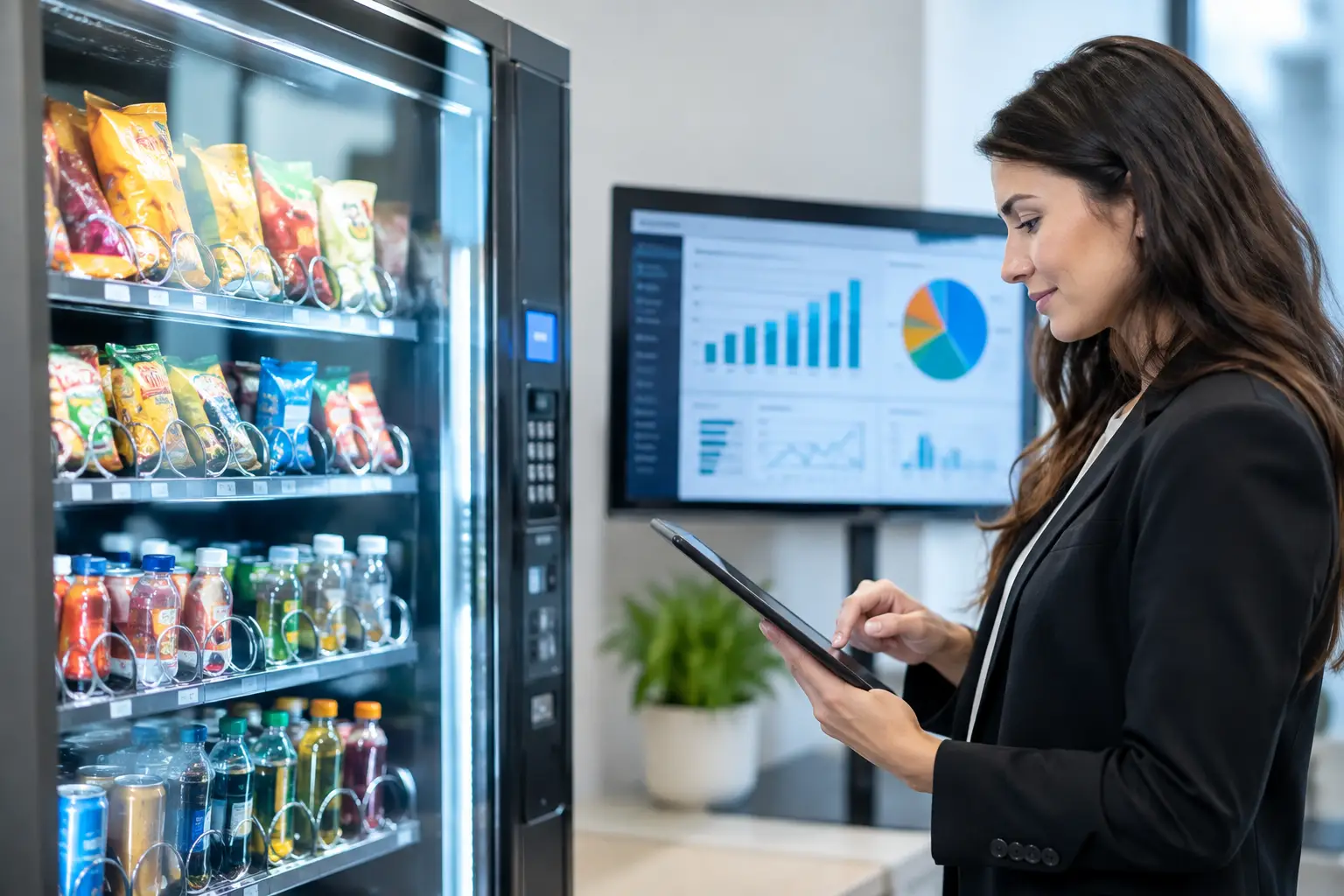
A vending machine can look busy while quietly losing money. A popular site may have frequent sales but repeated stock-outs, low-margin bestsellers, payment failures or products that expire before they sell. Automated retail analytics turns those hidden operational issues into practical information, helping operators make decisions based on actual machine performance rather than assumptions.
For a first-time vending investor, this means greater control without needing to visit every machine daily. For an established property operator or retailer, it means a clearer view of what customers buy, when they buy it and where revenue can be improved. The value is not simply collecting more data. It is using the right data to keep machines available, stocked appropriately and commercially worthwhile.
What automated retail analytics measures
Automated retail analytics refers to the reporting and machine data used to monitor self-service retail operations. In vending, micro markets, smart lockers and unattended food retail, the system can collect information from sales activity, payment terminals, inventory records and machine status alerts.
The most useful reports answer direct commercial questions. Which products are selling? Which selections are not moving? What time of day generates the strongest demand? Has a machine stopped accepting cashless payments? Is stock running low before the next planned visit? Are service issues affecting sales at a particular location?
A connected machine can send this information remotely through a management platform. Rather than relying on a manual count and a rough estimate of what needs replenishing, the operator can review sales and inventory data before arranging a route. This supports more efficient stock planning and reduces unnecessary site visits.
The exact data available depends on the machine model, payment hardware and software configuration. A basic setup may show sales totals and transaction history. A more advanced setup can provide real-time stock alerts, product-level performance, cashless payment reporting, temperature monitoring for chilled or frozen machines, and machine fault notifications.
Why sales totals are not enough
Total revenue is useful, but it does not explain why a machine performs well or poorly. Two machines can record the same monthly sales value while needing very different attention. One may have stable demand and healthy margins. The other may be selling heavily discounted products, suffering repeated stock-outs or requiring frequent technician call-outs.
Automated retail analytics gives operators the detail behind the headline number. Product-level sales data can show whether cold drinks outperform snacks at a gym, whether healthier options have enough demand to justify their shelf space, or whether a hot food machine has stronger sales during late shifts. This allows product ranges to suit the actual location rather than a generic vending plan.
It also helps identify missed revenue. If a popular drink sells out three days after every refill, the issue is not lack of demand. It may be that the product needs more facings, a larger-capacity machine, or a more frequent replenishment schedule. If a product remains untouched for weeks, it may need replacing, repricing or repositioning.
Margin matters too. A high-selling item is not automatically the best item. Operators should compare unit sales with product cost, selling price, wastage and refill effort. Some lines bring dependable profit with little handling, while others create waste or take up valuable space without delivering enough return.
Using data to improve day-to-day operations
The strongest use of analytics is operational. It helps turn machine management from a reactive task into a planned routine.
Build refill routes around demand
A fixed weekly refill route is simple, but it can be inefficient. Some machines may be nearly empty after two days, while others still have ample stock after a week. Sales history and live inventory information allow operators to prioritise machines that need attention first.
This can reduce wasted journeys, prevent lost sales from empty selections and give staff more time to focus on sites with genuine demand. It is particularly useful when machines are spread across offices, residential developments, gyms, hospitals, colleges or retail centres.
There is a practical balance to strike. Visiting too often increases labour and transport costs. Visiting too rarely risks stock-outs, poor customer experience and lost cashless transactions. The right schedule depends on product shelf life, site traffic, machine capacity and the reliability of the available data.
Detect faults before customers complain
A machine that is powered on is not necessarily trading properly. The card terminal may be offline, a product spiral may be jammed, cooling may be outside the required range, or a door may not be closing correctly. Machine alerts can help operators respond before a minor fault becomes a full day of missed sales.
For food, beverage and frozen vending, temperature monitoring is especially valuable. It supports product quality, helps protect stock and gives the operator an early warning when refrigeration performance needs checking. This does not remove the need for regular physical inspections, cleaning and preventive maintenance. It does, however, make those visits more informed.
Fast action matters because unattended retail depends on trust. If a customer pays but does not receive a product, or repeatedly finds a favourite item unavailable, they may stop using the machine altogether. Reliable equipment, responsive technical support and clear fault reporting all protect the site’s long-term revenue.
Make cashless performance visible
Cashless payment support is now a core part of commercial vending, not an optional extra. But installing a card reader is only the first step. Operators should review payment approval rates, transaction values, peak payment periods and terminal connectivity.
If card transactions are regularly declining because of a connectivity issue, the machine may appear quiet when the real problem is technical. If cashless users spend more per visit, operators may decide to introduce better-value bundles or higher-margin products. Payment data can also help compare locations fairly, especially where cash use is limited.
Automated retail analytics for better locations
Site selection remains one of the biggest factors in vending profitability. Analytics cannot turn a poor location into a strong one, but it can help confirm whether a location has the right demand profile.
When assessing a new site, look beyond footfall alone. A busy corridor may generate little buying intent, while a smaller workplace with long shifts and limited food options may deliver consistent sales. Existing data can show which categories perform in similar environments, the time windows when customers buy, and the machine capacity required to avoid regular stock-outs.
For example, a gym may favour chilled drinks, protein snacks and healthier food at early morning and evening peaks. An office site may produce coffee demand in the morning, drinks at lunch and snacks in the afternoon. A student residence may see later sales and stronger demand for ready meals. These patterns guide both machine choice and product selection.
A location should also be reviewed after installation. If performance remains below expectations, the answer may be a different product mix, a more visible position, improved payment options or a different machine type. Sometimes the honest answer is that demand is not sufficient. Analytics helps operators make that decision sooner, before putting more stock and time into an underperforming site.
Start with the decisions you need to make
The best analytics setup is not always the one with the most charts. It is the one that helps you take action. Before choosing a connected vending solution, decide what you need to manage: stock availability, expiry risk, cashless payments, technical faults, route planning, location comparison or all of these.
Then make sure the operational basics are in place. Product naming must be consistent, selling prices should be accurate, and staff need a clear process for recording refills, expired stock and service visits. Poor input data leads to misleading reports. A dashboard cannot compensate for stock loaded into the wrong selection or an unresolved machine fault.
It is also worth agreeing who reviews the information and how often. A weekly sales review may be enough for a small number of machines. A larger operation may need daily alerts for stock, payment failures and temperature exceptions, with monthly reviews of product margin and location performance.
KCH Vending can support businesses with vending equipment, cashless-ready solutions, remote monitoring options and practical after-sales assistance. The goal is to provide more than a machine: it is to help operators maintain a dependable retail point that is easier to manage and better positioned to generate revenue.
Turn information into small, profitable changes
Analytics works best when it leads to focused action. Change one or two slow products, add capacity to a frequent best-seller, adjust a refill schedule, investigate a payment alert or test a revised price. Monitor the result over a meaningful period, then decide whether to keep the change.
Avoid reacting to a single quiet day or one unusually busy week. Weather, paydays, school holidays, building occupancy and local events can all affect sales. Look for repeated patterns, compare similar periods and keep an eye on margin as well as turnover.
A well-managed machine should feel simple for the customer and controlled for the operator. With useful reporting, reliable technology and prompt support behind it, every sale becomes more than a transaction – it becomes a clearer signal about how to run the next one better.