




A machine can look fully stocked, accept cashless payments and sit in a busy location, yet still lose money quietly through poor temperature control. This vending temperature control guide helps operators protect product quality, reduce avoidable waste and keep chilled or frozen vending machines ready for sale in Malaysia’s hot, humid operating conditions.
For food, beverages and temperature-sensitive products, the display temperature is not just a setting. It affects customer confidence, shelf life, food safety and the cost of every restock. The goal is not simply to make the cabinet feel cold. It is to hold the correct product temperature consistently, even during busy periods, power interruptions and warm afternoons.
Start with the Product, Not the Machine Setting
The correct temperature depends on what you sell. A bottled soft drink can tolerate a wider serving range than a fresh sandwich, dairy drink or ready-to-eat meal. Frozen food has different requirements again. Before setting up a machine, review each product label, supplier guidance and any applicable food safety requirements for your business.
As a practical operating target, chilled food machines are commonly kept at 0°C to 5°C, with 3°C to 4°C providing a useful buffer for sensitive products. Frozen machines should generally maintain -18°C or below. Cold drinks may be set slightly warmer where product safety allows, often around 3°C to 7°C, to balance a refreshing serving temperature with sensible energy use.
The key point is that cabinet air temperature and actual product temperature are not always identical. Products near the door, in a freshly loaded tray or close to an air outlet may behave differently. A good setpoint gives the machine enough margin to keep every item within the required range, not just the sensor near the back of the cabinet.
Chilled Food Needs a Tighter Safety Margin
Fresh meals, sandwiches, milk-based drinks, yoghurt, salads and cut fruit demand closer control than packaged snacks. If the machine is frequently opened for replenishment, located near an entrance or exposed to afternoon sun, setting it at the warm end of the acceptable range leaves little room for error.
For operators selling higher-value fresh food, a slightly lower setpoint can reduce risk, but there is a trade-off. Excessively low settings can freeze delicate products, damage texture and increase electricity consumption. Test your actual product range before deciding on a permanent programme.
Frozen Stock Must Stay Frozen
Frozen meals, ice cream and frozen food vending require consistent low temperatures. A short rise in cabinet temperature may not always mean that every product has thawed, but repeated fluctuations can affect quality and create costly stock decisions.
Avoid overfilling frozen compartments or blocking internal airflow. A full machine can be profitable, but tightly packed stock may prevent cold air from circulating around products. Leave space where the machine design requires it and follow the loading layout recommended for that model.
Choose the Right Location for Temperature Stability
Location affects refrigeration performance as much as the machine specification. In a shopping centre, office lobby or gym, the ambient temperature can change throughout the day. In semi-outdoor areas, heat, humidity and direct sunlight can put far more pressure on the cooling system.
Place the machine away from direct sun, cooking equipment, hot air discharge points and poorly ventilated corners. Leave the recommended clearance around the rear and sides so the condenser can release heat properly. A machine pushed tightly against a wall may still cool at first, but it will work harder, consume more energy and be more likely to trigger temperature alarms.
Also consider the customer environment. A chilled food machine near a busy entrance may be opened repeatedly during peak periods. That does not make it a poor location, but it means the temperature setting, product mix and monitoring routine need to account for heavier use.
Use Remote Monitoring Before a Small Issue Becomes Lost Stock
Remote monitoring is one of the most useful tools for commercial vending operators. It allows you to see machine status, temperature trends, stock levels and alerts without travelling to every location simply to check whether the cabinet is running correctly.
A single temperature reading is helpful. A trend is more valuable. If a machine slowly takes longer to recover after the door is opened, or shows warmer readings at the same time each day, that can point to an airflow problem, a dirty condenser, a site temperature issue or a refrigeration component that needs attention.
Set alert thresholds that are practical for the products inside the machine. An alarm should give you enough time to investigate before stock is compromised, while avoiding unnecessary call-outs for brief, harmless changes during servicing or loading. The correct threshold depends on the product category and the machine’s normal operating pattern.
For multi-site operators, remote monitoring also supports smarter replenishment. If a machine has a temperature fault, you can pause delivery plans, prioritise a technician visit and avoid loading additional stock into a cabinet that may not be ready.
Check Temperature Properly During Replenishment
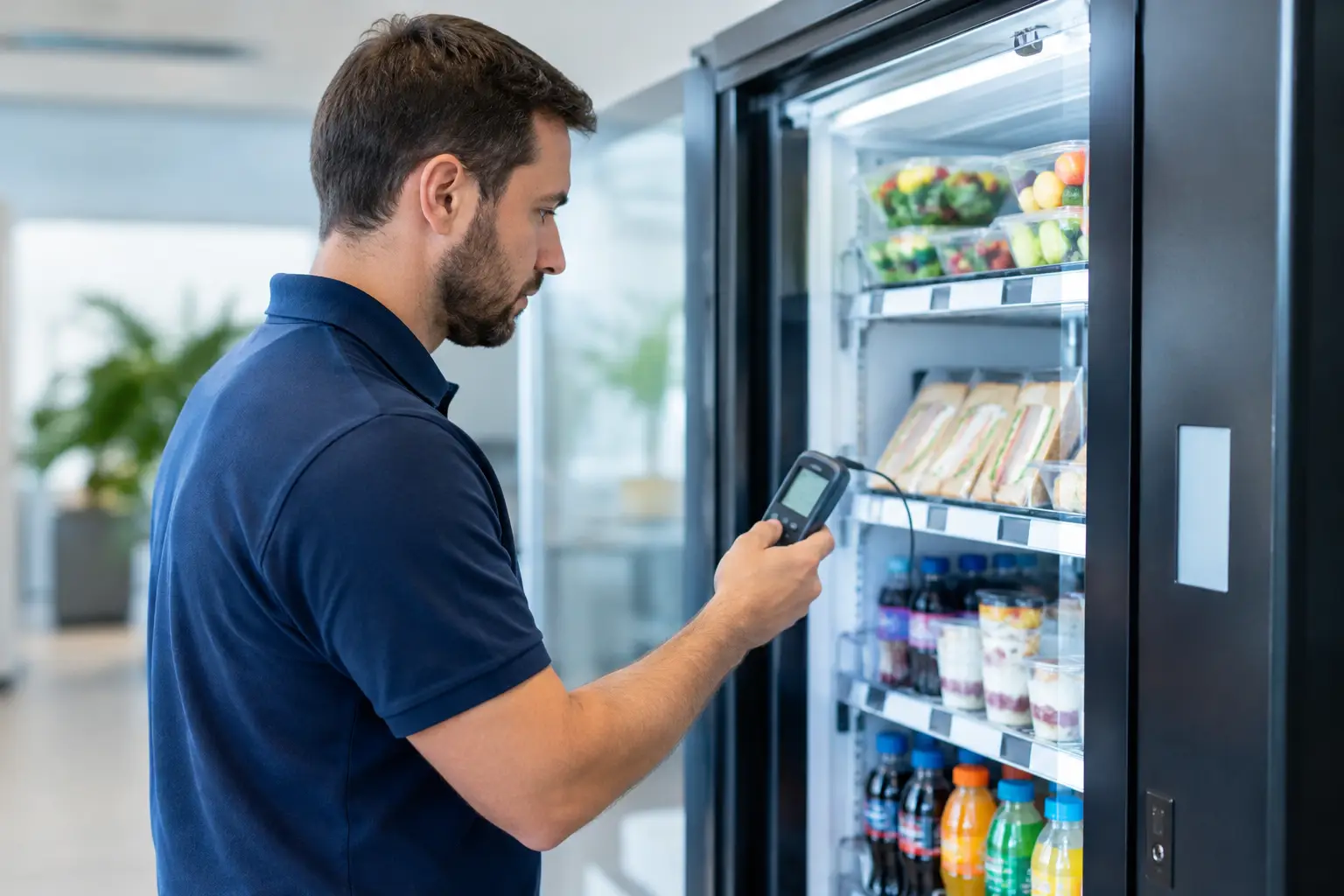
Do not rely only on the number shown on the machine display. During routine visits, check the cabinet condition and take an independent reading with a suitable calibrated thermometer where appropriate. For fresh food, assess product temperature rather than measuring only the air around it.
A simple operating record should capture the date, machine location, displayed temperature, checked temperature where required, any alarm history and corrective action taken. This is particularly useful when several staff members restock machines or when a customer raises a quality concern.
Allow the machine to recover after loading. Opening the door for an extended period introduces warm, humid air, especially in Malaysia’s climate. If stock arrives in a warm vehicle or sits at room temperature while being organised, the machine has to work harder to bring it back to the correct range. Prepare products before opening the door, load efficiently and close the machine promptly.
Keep Airflow and Refrigeration Components Clean
Temperature problems are often maintenance problems in disguise. Dust, grease and debris on a condenser reduce heat transfer. Blocked vents restrict airflow. Damaged door seals allow cold air to escape and moisture to enter. Each issue can make the compressor work longer while the cabinet struggles to hold its set temperature.
Build cleaning into the maintenance schedule rather than waiting for an alarm. The required frequency depends on the site. A machine in a clean corporate office may need less attention than one near a food court, workshop, roadside entrance or high-traffic retail area.
Check that door seals are clean and sit evenly when closed. Look for condensation, excessive frost, unusual compressor noise or a cabinet that seems to run continuously. These signs do not always mean a major failure, but they justify an early inspection before stock loss becomes expensive.
What to Do When a Temperature Alarm Appears
A temperature alarm needs a calm, documented response. First, confirm whether the machine has been opened recently for loading or service. Then check whether the door is fully closed, airflow vents are clear and the machine has power. If the reading does not recover within the expected period, inspect the products and stop selling any stock that may no longer meet your temperature requirements.
Do not reset an alarm and assume the problem has disappeared. Record the time, the highest temperature shown, how long the issue lasted and the action taken. This information helps a service technician diagnose whether the cause is site conditions, loading practice, sensor accuracy, airflow or a refrigeration fault.
Where remote monitoring is available, respond according to the type of stock. A short fluctuation in a drinks machine may be manageable. A prolonged alarm in a fresh food or frozen machine requires quicker action, including product assessment, stock removal where necessary and technical support.
Plan for Power Interruptions and Site Conditions
Power interruptions can happen in commercial buildings, during maintenance works or after electrical trips. Keep a clear procedure for the site manager and staff who may be nearby. They should know not to repeatedly open the machine, how to report the issue and whom to contact.
After power returns, allow the machine to reach its operating range before treating it as ready for normal sales. Review the temperature history if your system provides it. Whether stock can remain for sale depends on the product, duration of the interruption and actual temperature exposure, not just whether the machine has switched back on.
This is also why choosing a supplier with dependable after-sales support matters. KCH Vending helps operators with machine selection, setup, maintenance and technical assistance, so temperature-sensitive vending can be managed as a commercial operation rather than a constant worry.
Make Temperature Control Part of Profit Protection
Temperature control is not an isolated technical task. It sits alongside location planning, product selection, replenishment discipline, machine maintenance and customer service. When these areas work together, you reduce spoilage, protect brand reputation and make better decisions about which machines and products deserve further investment.
Start with realistic settings for your stock, monitor how each location performs and act early when readings begin to drift. A well-maintained vending machine should quietly protect your products while it earns for your business.