




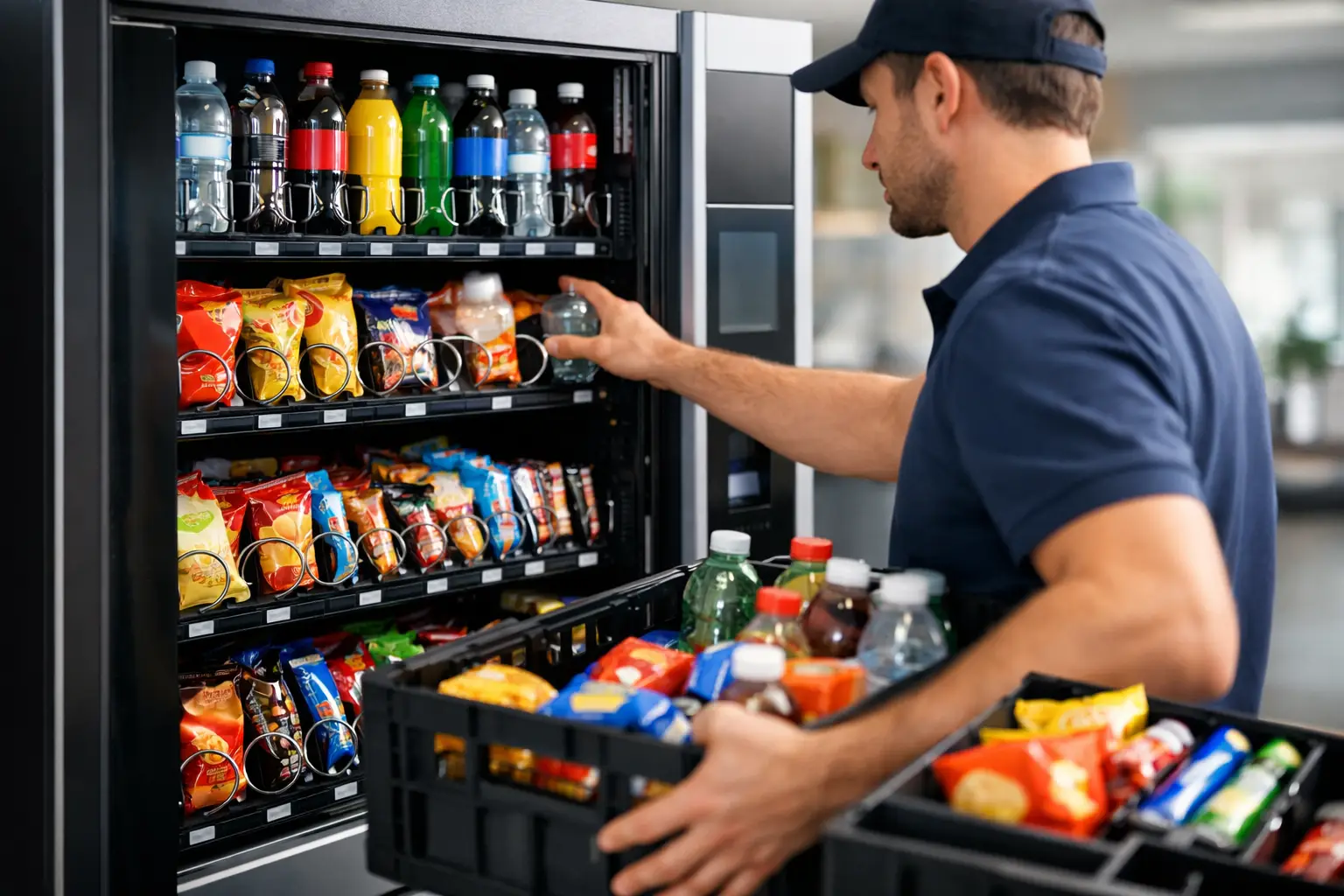
A vending machine can be in a busy location and still underperform if customers do not see products they want at the moment they want them. Learning how to stock vending machines is therefore not just about filling empty spirals. It is about matching the right products, quantities and prices to the people using the site, while keeping waste and unnecessary service visits under control.
For first-time operators, a sensible stocking routine creates consistency from day one. For established businesses, it is the quickest way to improve sales from an existing machine without investing in another location.
Start with the location, not the product catalogue
Every successful product mix begins with the site. A vending machine at a gym, office, college, hospital or transport hub serves different customer needs, even when the machines look similar.
At a gym, customers may look for bottled water, sports drinks, protein bars and healthier snacks. In an office, coffee, familiar crisps, chocolate and convenient lunch options may move faster. A residential building may generate stronger evening demand for instant meals, frozen food or drinks. The time of day matters too. A machine in a workplace may have a morning coffee rush and an afternoon snack peak, while a 24-hour site needs a broader all-day range.
Before placing the first order, speak with the site manager and observe the surrounding retail options. If there is a café selling premium coffee beside the machine, competing on the same offer may be difficult. If the nearest food outlet is a ten-minute walk away, convenient ready-to-eat products could be a strong opportunity.
Match products to the machine type
The machine must be suited to what it sells. Standard snack and beverage machines work well for packaged products with reliable dimensions and shelf lives. Fresh food machines need more careful temperature control and tighter rotation. Frozen food machines require products that can withstand storage and dispensing without damage. Hot food, coffee and micro market formats each have their own replenishment requirements.
Do not force products into a machine simply because they are popular elsewhere. Check the product width, height, weight and packaging strength against the selected tray, coil or delivery system. A product that regularly jams costs more than the margin it produces.
Build a product range that earns its space
A well-stocked vending machine should feel familiar, useful and easy to choose from. Customers usually want a mix of trusted favourites and a small number of alternatives, rather than an overcrowded selection of similar items.
Start with proven, recognisable lines, then test products that suit the location. In many sites, a practical opening range includes drinks, savoury snacks, sweet snacks and a healthier or functional choice. Where food demand is higher, add meal solutions rather than filling every selection with low-value confectionery.
Use product variety with a commercial purpose. Consider offering:
- Everyday bestsellers such as water, soft drinks, crisps and chocolate
- Better-for-you choices such as low-sugar drinks, nuts, protein snacks or lighter meals
- Premium or convenience items with stronger margins, where the location supports the price
- Site-specific products, such as isotonic drinks for gyms or halal-certified meal options for suitable locations
The exact balance depends on sales data. A health-focused product range makes sense in a fitness centre, but a machine stocked only with niche items may sell slowly if customers also expect familiar treats. Give people choice without creating too many slow-moving lines.
Price for convenience, not just cost
Vending prices need to cover the product cost, payment fees, delivery or replenishment time, machine operating costs and expected wastage. They must also feel reasonable for the location.
Avoid setting every price at the highest possible level. A lower-margin product that sells consistently can be more valuable than a premium item that sits until it expires. Compare nearby retail prices, but remember that a cashless vending machine provides immediate convenience, often outside normal shop hours. Customers may accept a fair convenience premium when the product is available, cold and easy to pay for.
Set stock levels with par levels
The most efficient way to stock vending machines is to set a par level for each product. This is the quantity you aim to have available after each visit. For a fast-selling bottled drink, the par level may be the full capacity of several selections. For a slower premium snack, it may be only a few units.
Par levels prevent two common problems: overstocking slow lines and repeatedly running out of bestsellers. Start with conservative quantities if the machine is new, then adjust after two to four weeks of real sales.
Remote monitoring is particularly useful here. It can show which selections are running low, which products are not moving and whether the machine has payment or technical alerts. Instead of visiting a machine just to find it half full, operators can plan replenishment around actual demand. This reduces travel time, helps avoid missed sales and makes multi-site operations more manageable.
For sites without remote monitoring, maintain a simple stock record. Note the date, product loaded, quantity added, quantity remaining and any customer feedback. The record soon reveals patterns, including products that sell only at certain times of the month or during school terms.
Rotate stock carefully and protect product quality
Stock rotation is essential, especially for food, dairy-based drinks and items with shorter shelf lives. Use the first-in, first-out method: place newer stock behind older stock so that older items sell first. Check dates every time you refill the machine, not only when there is an obvious issue.
Remove damaged packaging, melted confectionery, swollen cans and products approaching their use-by date. A single poor purchase can discourage repeat customers and damage confidence in the machine. For chilled and frozen machines, confirm that the temperature display and refrigeration system are operating correctly before loading products.
Malaysia’s warm and humid conditions also make product choice and machine placement important. Chocolate, certain snack coatings and heat-sensitive products can suffer if the machine is exposed to direct sunlight or placed in an area with poor ventilation. A suitable machine location protects both the equipment and the stock inside it.
Merchandise the machine for faster decisions
How products are arranged affects what customers buy. Put proven sellers at eye level where possible, and keep similar categories together so customers can find what they need quickly. Drinks should be clearly grouped by type, while snacks should not look randomly placed across the machine.
Use brighter, recognisable packaging to create visual interest, but do not rely on appearance alone. The product name and price must be easy to read through the glass or touchscreen. If a selection is empty, refill it promptly or move a fast-selling product into that slot where the machine configuration allows.
New products benefit from a visible position during the trial period. If they do not sell after a fair test, replace them. Vending space is limited, and every selection should justify its place through sales, margin or a clear service purpose.
Make replenishment a reliable routine
A professional refill visit should include more than loading stock. Clean the glass, payment area and delivery compartment. Check that labels and prices match the products. Test a selection where appropriate, inspect for jams and confirm that cashless payment is working properly.
A practical replenishment routine should cover stock, hygiene, pricing and machine condition. If an item has sold out repeatedly, increase its par level or add a second selection. If a product is consistently slow, reduce its allocation or replace it. Where a machine has recurring dispensing issues, resolve the mechanical cause rather than continually changing products.
This is where dependable after-sales support matters. Reliable spare parts, responsive repairs and ongoing technical guidance help operators protect uptime, particularly when vending is one part of a wider business operation. KCH Vending supports businesses with the equipment and operational assistance needed to keep self-service retail running reliably.
Review sales data and keep improving
The best vending range is rarely perfect on the first fill. Review sales by product, selection, day and time period. Look for stock-outs, low-margin bestsellers, slow lines and changes in demand caused by weather, events or site occupancy.
Make changes gradually. Replacing half the machine’s range at once makes it difficult to understand what improved performance. Test one or two new products, monitor the results and keep what works. If a location has strong demand but limited capacity, a larger machine, additional machine or micro market may be a better answer than constantly overfilling the same unit.
A vending machine earns trust when customers know it will have the products they expect, accept their preferred payment method and dispense correctly. Stock it with that standard in mind, and each refill becomes an opportunity to build repeat sales rather than simply fill shelves.