




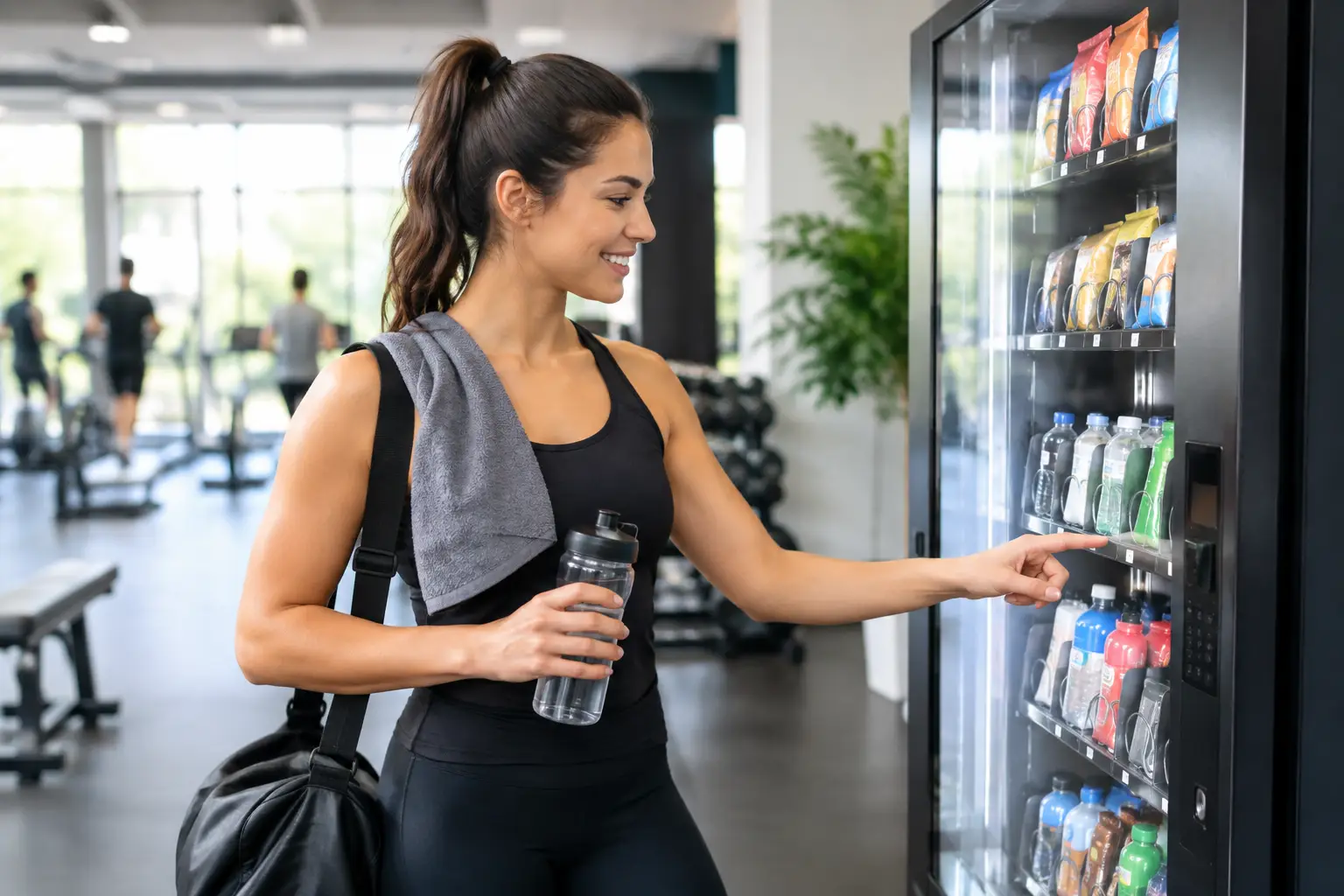
A member leaving a 6am class has little patience for queues, empty shelves or a payment terminal that will not work. That short moment between training and the next commitment is where gym vending results are won or lost. A well-planned machine can give members a convenient option for hydration, protein and healthier snacks while creating an additional income stream for the gym.
The machine itself matters, but it is only one part of the commercial picture. Consistent sales come from choosing the right location, stocking products people genuinely want, accepting the way they prefer to pay and keeping the machine available when demand is highest.
What Good Gym Vending Results Look Like
Turnover is the obvious measure, but it is not the only one. Strong gym vending results combine regular sales with healthy margins, low wastage and minimal downtime. A machine that sells large volumes of low-margin items may produce less profit than a carefully managed machine with a smaller, higher-value range.
It also helps to judge performance over a realistic period. The first few weeks reveal which products get attention, but gym routines, promotions and membership patterns can affect daily demand. A site may be busiest before work, after office hours or at weekends. Reviewing sales by time and day provides a much clearer picture than looking at a single total at the end of the month.
For gym operators, vending should support the member experience rather than compete with it. If the site has a staffed café or juice bar, the machine can cover quieter hours, offer fast grab-and-go essentials or serve an area away from the main counter. If there is no food and drink outlet, it can become a useful everyday convenience point.
Start With Placement, Not Product Selection
The highest-footfall area is not always the best place for a vending machine. A busy reception may create visibility, but members may be focused on checking in rather than buying. In many gyms, stronger positions are near the exit, beside changing rooms, close to a functional training zone or in a waiting area where members have time to browse.
The machine must be easy to see without obstructing circulation or emergency access. Good lighting, a nearby power supply and reliable mobile signal are practical requirements that are easy to overlook during planning. If cashless payments and remote monitoring are part of the setup, connectivity is not optional.
Consider who uses each area. A machine near weight-training equipment may perform well with protein drinks, water and energy bars. A family-focused leisure centre may have broader demand for cold drinks, healthier snacks and light meal options. In a 24-hour gym, vending can be particularly valuable because there may be no staff present during the periods members need it most.
Build a Product Mix Around Real Member Habits
A gym machine should not be stocked like a general office vending machine. Members usually buy for a reason: they need water after a session, a quick protein option, an electrolyte drink or something convenient before travelling home. Products that match those needs are more likely to earn repeat purchases.
Water is often a dependable foundation, but relying on one category limits sales. A balanced range can include low-sugar drinks, ready-to-drink protein shakes, protein bars, nuts, fruit-based snacks and selected indulgent items. The right balance depends on the gym’s member profile. A premium boutique studio may favour a curated healthy range, while a large budget gym may need familiar brands and a wider spread of price points.
Price needs careful handling. Members will pay for convenience, especially after a workout, but prices that feel unreasonable can damage trust and reduce repeat sales. Review both product cost and local competition, including the gym café, nearby convenience shops and petrol stations. It is usually better to carry fewer products that turn quickly than a large selection that creates expired stock and tied-up cash.
Temperature control also affects demand. Cold beverages matter more in warm conditions and high-intensity facilities. For sites with demand for meals or recovery-focused products, refrigerated, frozen or hot food vending may be more suitable than a standard snack machine. The equipment should follow the opportunity, not the other way round.
Cashless Payments Remove a Common Barrier
Many members arrive with a mobile phone, keys and little else. If the machine accepts only coins or notes, it may lose sales before a customer has even considered the product. Card, contactless and cashless payment options make a vending purchase quicker and more practical for modern gym users.
A clear touchscreen interface can also improve the buying experience by showing product information, pricing and simple selection steps. This is particularly useful when a machine carries healthier products, specialist drinks or several size options. The goal is straightforward: make the purchase easy enough that a member can complete it while heading out of the gym.
Use Monitoring to Protect Sales
An empty best-selling column is not a small operational issue. It represents lost sales every hour the machine remains unstocked. Remote monitoring helps operators see stock levels, sales patterns and machine status without making unnecessary site visits.
This information makes restocking more efficient. Instead of replenishing every product equally, operators can focus on fast-selling lines and reduce orders for slow items. Over time, the data can reveal whether a product needs a different price, a better position in the machine or replacing altogether.
Monitoring is also useful for spotting technical issues early. Payment faults, temperature alerts and stock errors need a fast response, especially at a gym that operates long hours. Members tend to remember a machine that failed when they needed it. Reliable technical support and access to spare parts protect both revenue and the gym’s reputation.
Reliable Service Has a Direct Effect on Revenue
A vending machine is an unattended retail point, but it should not be unsupported. Regular cleaning, correct product loading, payment checks and preventative maintenance all contribute to better performance. A dirty display, poor product presentation or repeated error message can discourage sales even when the machine is fully stocked.
When selecting a supplier, look beyond the purchase price. Ask about warranty coverage, repair response, local service availability, spare parts and guidance during installation. A lower-cost machine can become expensive if it is difficult to maintain or remains out of service for long periods.
KCH Vending supports businesses with equipment selection, cashless payment capability, remote monitoring and practical after-sales assistance. For first-time vending investors, that operational support can be as valuable as the machine specification. It reduces uncertainty and gives the operator a clearer route from installation to consistent daily trading.
Review Gym Vending Results Every Week
Weekly review keeps small issues from becoming long-term problems. Compare sales value, units sold, stock movement and payment method usage. Then look for the reason behind the numbers. A drop in cold drink sales could point to a stock issue, changing weather, a pricing concern or a quieter class timetable.
Pay attention to products that sell out first and those that barely move. Fast sellers deserve priority in restocking, while slow products should be tested at a different price or replaced. It is also worth checking whether specific promotions, fitness challenges or new member campaigns create a temporary spike in demand.
Do not change everything at once. If you alter products, prices and machine placement together, it becomes difficult to identify what improved performance. Make one sensible adjustment, monitor the result and build decisions from actual sales data.
A gym vending machine works best when it is treated as an active retail channel, not a box placed in a corner. Give members the products they need at the moment they need them, keep payment simple and act quickly when the data or machine calls for attention. That is how a convenient amenity becomes dependable daily revenue.