




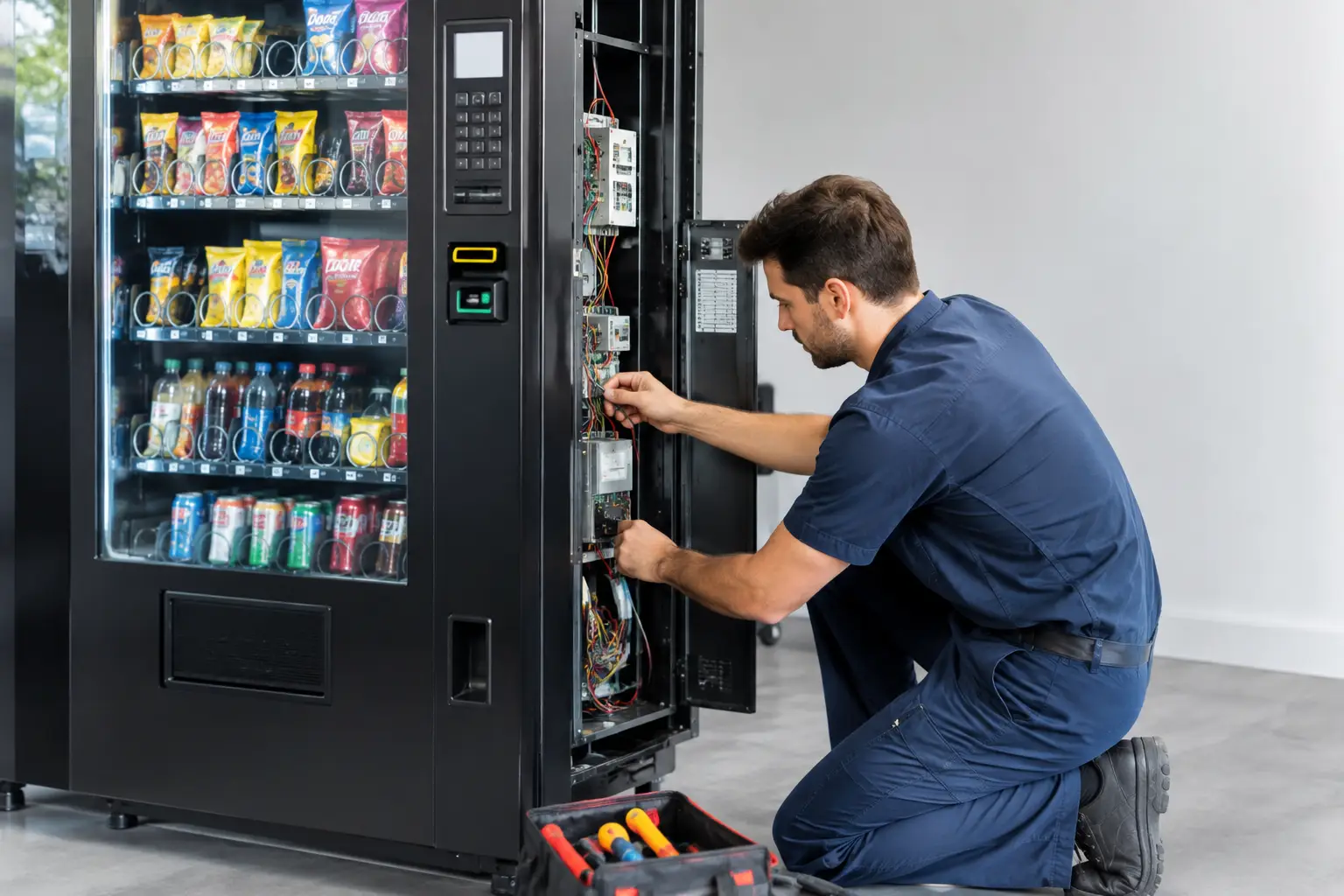
A vending machine can look ready to earn the moment it arrives, but the wrong power setup can delay opening day, interrupt sales and create avoidable repair costs. This vending machine electrical requirements guide helps Malaysian business owners prepare a site properly before delivery, whether the machine will sell drinks, snacks, frozen food, hot meals or fresh coffee.
Electrical planning is not just a facilities task. Stable power protects your stock, payment system, refrigeration and customer experience. A machine that repeatedly trips its circuit or loses power in a busy location is a machine that cannot produce reliable revenue.
Start with the machine specification
Every vending machine has its own electrical rating. The figure on the machine data plate and the supplier’s technical specification should always take priority over general advice. Check the required voltage, frequency, rated wattage, plug type and recommended circuit protection before confirming the installation position.
Most commercial vending machines in Malaysia operate on a 230V, 50Hz single-phase supply. However, their power demand can vary considerably. A standard ambient snack machine may have a modest continuous load, while a chilled beverage machine needs additional power for refrigeration. Frozen food, hot food and bean-to-cup coffee machines can draw much more power, particularly when compressors, heaters or brewing systems start operating.
Do not select a socket based only on the machine’s average consumption. Electrical equipment can have a higher starting current, and heating or cooling cycles can cause demand to rise and fall throughout the day. The circuit must safely accommodate these peaks.
Is a dedicated circuit necessary?
For many commercial installations, a dedicated circuit is the sensible choice. It gives the machine a reliable supply without competing with cleaning equipment, display lighting, water boilers, kitchen appliances or other high-load equipment nearby.
A dedicated circuit is especially advisable for refrigerated, frozen, hot food and coffee vending machines. These models work harder than a conventional snack machine and may run continuously to protect product quality. If a freezer machine shares a circuit with another appliance and the breaker trips overnight, you risk product loss as well as lost sales.
A small, low-power vending machine may be suitable for an existing circuit if a qualified electrician confirms that the circuit has sufficient spare capacity and serves appropriate loads. It depends on the building’s electrical layout, the machine rating and what else is connected. For a business site, guessing is not a cost-saving measure.
Avoid extension leads and multi-plug adaptors
Vending machines should normally connect directly to a properly installed wall socket or an approved isolator point. Extension leads and multi-plug adaptors are poor long-term solutions because they can be overloaded, damaged by foot traffic or removed during cleaning.
They also make it harder to identify the source of a power fault. A direct, labelled connection keeps the setup safer and makes maintenance faster when support is required.
Choose the right socket and location
The socket should be accessible to authorised staff but not easily reached by customers. It must remain available for servicing, emergency isolation and routine cleaning. Avoid locating it where water can pool, where a machine may crush the cable, or where it is blocked by fixed cabinetry.
In Malaysia, many commercial sites use 13A British Standard-style sockets. Whether this is suitable depends on the machine’s rated load and the condition of the existing installation. Higher-load equipment may require a different connection arrangement specified by the manufacturer and installed by a competent electrician.
Plan the socket location before the machine is positioned. A socket directly behind the machine may sound neat, but it can prevent the unit from sitting flush or make it difficult to unplug during service. The cable should reach without stretching, looping across a walkway or being trapped beneath the machine.
For machines placed outdoors, in semi-covered areas or near wash-down zones, the installation needs more careful protection from moisture, dust and heat. The machine itself must be rated for that environment, not merely the socket. Indoor commercial vending equipment should not be treated as weatherproof because it is under an awning.
Match protection to the site
A suitable protective device helps reduce the risk of electric shock and limits damage during an electrical fault. Your electrician may recommend an RCD or RCBO arrangement depending on the distribution board and the building’s existing protection. These devices should be selected and tested as part of a proper installation, not added as an afterthought.
Good earthing is equally essential. A vending machine with a metal cabinet relies on correct earthing to protect users and technicians. If the site has an older electrical system, arrange an inspection before installing equipment. Loose connections, poor earthing and worn sockets are common causes of intermittent faults that can be mistaken for a machine problem.
Ask for the circuit to be clearly labelled at the distribution board. When a site manager, landlord or technician needs to isolate the machine, clear labelling saves time and avoids switching off unrelated business equipment.
Allow for the machine type
Electrical requirements should reflect what the machine does, not simply its footprint. A slim machine can still have a substantial power requirement if it heats food or produces fresh drinks.
Snack and ambient machines
Ambient snack machines generally have lower electrical demand, although touchscreen displays, lifts, lighting and cashless payment terminals add to the load. They are often straightforward to install, provided the socket and circuit are sound.
Chilled beverages and fresh food
Refrigerated machines need dependable power around the clock. Temperature control is central to product quality, so avoid circuits that are routinely switched off after business hours. Confirm there is adequate ventilation space around the machine as well. Poor airflow makes the cooling system work harder and can increase electricity use.
Frozen food and ice cream
Freezer vending machines require careful site assessment. They may have higher compressor demand and must stay energised continuously. A dedicated circuit, stable indoor temperature and remote monitoring can help operators respond quickly if a temperature or power issue occurs.
Coffee and hot food machines
Coffee machines, hot food vending machines and units with microwave or heating functions are usually the most demanding categories. Heating elements can draw significant current, so their circuit and connection should be confirmed before purchase. Do not assume that a socket serving a small refrigerator can support a commercial coffee machine.
Plan for cashless payments and connectivity too
The mains supply runs the vending machine, but a profitable operation also depends on payment and communications systems. Cashless readers, touchscreens and remote monitoring devices need stable power to remain available to customers.
A brief outage may mean a machine restarts successfully, but it can also interrupt a transaction, affect a card reader connection or require the system to reconnect to the network. In high-traffic sites such as gyms, offices, colleges, retail centres and transport locations, reliability matters more than shaving a small amount from installation costs.
If the machine uses Wi-Fi or mobile connectivity, assess signal strength at the exact installation point. This is not an electrical requirement, but it is part of a successful commissioning process. A powered machine with unreliable payment connectivity still loses sales.
Build electrical checks into site approval
Before ordering or moving a machine, share the proposed location, machine model and electrical details with the property manager or landlord. Some buildings require approval for new dedicated circuits, work at the distribution board or installations in common areas.
A practical pre-installation check should confirm four things: the available supply matches the machine specification, the circuit has adequate capacity, the socket or connection point is safe and accessible, and the location protects the equipment from heat, water and physical damage. Where wiring work is required, use a qualified electrician who understands commercial installations and local requirements.
Keep a record of the machine model, circuit reference, installation date and electrician’s test results. This makes future servicing simpler, particularly if the site changes managers or expands to several machines.
Think beyond installation day
Power consumption affects operating costs, especially for refrigerated and heated equipment. The cheapest machine position is not always the best one if it sits in direct afternoon sun, beside a hot kitchen pass or in a poorly ventilated corridor. Heat forces cooling systems to run longer, while an awkward location can increase accidental cable damage and service time.
Consider how the machine will be cleaned, restocked and repaired. Staff should be able to isolate power safely when instructed, and technicians should have enough room to open the door and access internal components. A well-planned electrical point supports faster maintenance and less disruption to your customers.
KCH Vending can help business owners assess machine suitability and prepare for a practical installation, including the needs of cashless, refrigerated and higher-demand vending equipment. The aim is not simply to place a machine at a site, but to give it the stable operating conditions needed to trade reliably.
The best time to solve a power issue is before the machine arrives. Confirm the specification, involve a qualified electrician early and choose a location that supports safe access, stable power and the sales opportunity you expect from the site.