




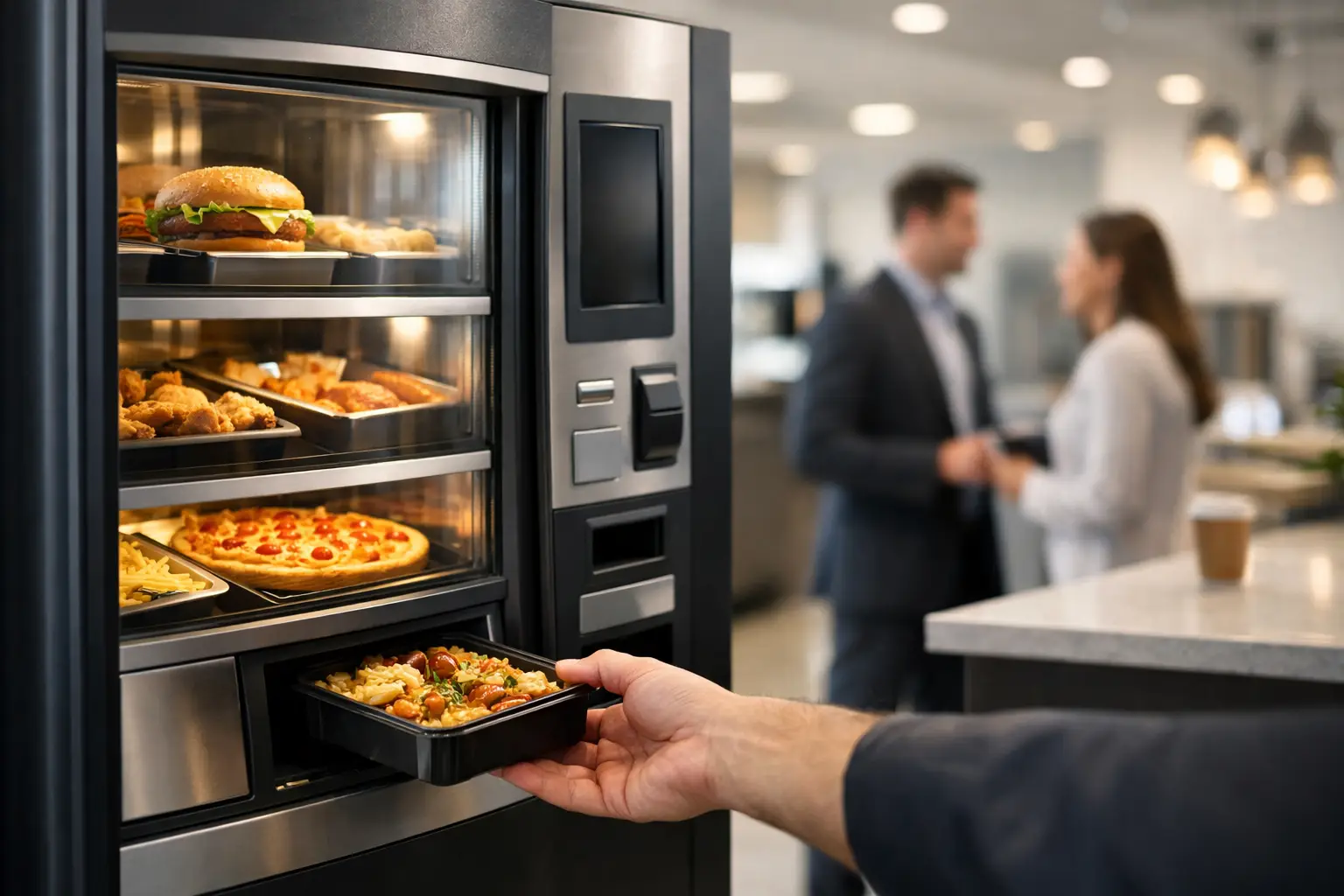
A missed lunch rush is expensive. In offices, hospitals, student areas and transport hubs, people often want a proper hot meal at the exact moment traditional food service is slow, shut, or overstretched. That is where a hot food vending machine business can make commercial sense. It gives operators a way to serve ready-to-eat meals with less staffing pressure, longer trading hours and a model that can scale across multiple sites.
The opportunity is real, but it is not as simple as placing a machine and waiting for takings to roll in. Hot food vending works best when the machine, menu, payment system and location strategy are aligned from the start. For business owners and first-time vending investors, that is usually the difference between a machine that stays busy and one that becomes an expensive fixture.
Why a hot food vending machine business is growing
Consumer habits have shifted towards speed, convenience and cashless buying. In many commercial environments, customers no longer expect to queue for every purchase. They want quick access, clear pricing and a reliable product, especially during lunch breaks, late hours and overnight periods when food choices are limited.
Hot food vending meets that demand in a practical way. It extends food availability beyond normal operating hours and reduces the reliance on front-of-house labour. For property managers, it can improve tenant convenience. For employers, it can support staff welfare in workplaces with shift patterns. For entrepreneurs, it opens a route into unattended retail with a product category that usually delivers a stronger perceived value than standard snacks.
That said, the model is not universal. A hot food machine will usually require more careful planning than a drinks or snack machine. Food safety, menu suitability, replenishment cycles and equipment reliability matter more. The earning potential can be better, but so is the need for operational discipline.
What makes the model commercially viable
The strongest hot food vending locations share one thing: predictable demand. Busy does not always mean profitable. A site with heavy footfall but low dwell time may underperform compared with a workplace or residential setting where people regularly need a fast meal and have limited alternatives.
Offices, factories, colleges, hospitals, serviced residences and transport-linked buildings are common examples because they create repeat purchase behaviour. Customers in these locations are often buying for convenience rather than browsing for novelty. That is good for sales consistency.
Machine uptime is another key factor. If a machine is out of service during peak periods, revenue disappears quickly. This is why after-sales support, spare parts access and maintenance responsiveness should be treated as part of the business model, not an afterthought. Buyers often focus on the purchase price first, but long-term profitability depends heavily on whether the equipment can keep trading with minimal disruption.
Cashless payment support also has a direct impact on performance. In many commercial settings, card and e-wallet acceptance is no longer optional. If a customer cannot pay easily, the sale is lost. Touchscreen interfaces, clear product display and remote monitoring add further operational value because they help reduce friction for buyers and visibility gaps for operators.
Choosing the right machine for your hot food vending machine business
Not every machine suits every menu, and not every menu suits every location. This is where many new operators make early mistakes. They start with the food they like, rather than the food the site can support.
A good machine choice depends on the type of meals you want to sell, how quickly they can be dispensed, how stock is stored, and how often you can replenish it. Some businesses are better suited to compact, high-turnover meals for office workers. Others may need a wider variety for mixed-use commercial sites with day and night demand.
You also need to consider payment options, telemetry, branding potential and serviceability. A machine with remote monitoring can help you track stock levels, errors and sales patterns without constant on-site checks. That becomes increasingly important if you intend to operate more than one unit.
For many buyers, especially first-time investors, supplier support should carry real weight in the decision. A cheaper machine with weak support can cost more over time through downtime, difficult repairs and delayed replacement parts. A dependable supplier does more than deliver hardware. They help reduce avoidable operating risk.
The menu matters more than most buyers expect
In a hot food vending operation, menu planning is a commercial decision first and a culinary one second. Meals need to be appealing, easy to understand, suitable for the machine format and priced sensibly for the location.
The best-selling products are often familiar options that feel like a proper meal without creating decision fatigue. If customers have only a short break, they do not want to study an overcomplicated range. They want a straightforward choice that feels worth the spend and can be purchased in seconds.
Price sensitivity also varies by site. A premium office building may support higher price points than a student-focused location. At the same time, underpricing can be just as damaging as overpricing if margins become too tight to support replenishment, maintenance and wastage.
Rotation speed is another practical concern. If a menu is too broad and demand is uneven, slow-moving items can create avoidable waste or inconsistency. In most cases, a tighter range of proven sellers beats a large range of uncertain performers.
Location strategy is where profit is won or lost
If you strip away the technology, vending is still a location business. A strong machine in the wrong place will struggle. A well-positioned machine in a site with real demand can outperform expectations.
The best locations usually have three traits. People are present in meaningful numbers, they need convenience, and they have limited nearby alternatives at the moment of purchase. This is why meal-based vending often works well in buildings with closed canteens, late operating hours, shift work or peak-time congestion.
Before installation, it helps to ask practical questions. Who is buying, and at what times? Are they staff, visitors, students or residents? Is there a breakfast gap, a lunch rush, or late-night demand? Will customers view the machine as a useful service or just an impulse option?
Access, visibility and power supply also matter. A machine hidden in a low-traffic corner rarely performs at its best. Placement near entrances, lift lobbies, waiting areas or staff common spaces can improve use, provided the location remains safe, convenient and easy to service.
Operations: the less visible side of success
A profitable hot food vending machine business depends on routines. Stock needs checking, temperatures need monitoring, the machine needs cleaning, and faults need addressing quickly. None of this is glamorous, but it is what protects revenue.
Remote monitoring helps because it reduces guesswork. You can see stock movement, identify recurring issues and respond faster when something needs attention. For operators managing several units, this becomes a major efficiency gain.
Maintenance support is equally important. Even a well-built machine will need servicing over time. What matters is how quickly issues can be diagnosed and resolved. Delays affect more than sales for the day. They can damage trust at the site and make customers less likely to return.
This is where a full-service supplier can make a practical difference. Businesses such as KCH Vending support buyers not only with machine supply, but also with setup guidance, spare parts, maintenance assistance and advice on placement strategy. For buyers entering automated retail for the first time, that kind of support can shorten the learning curve considerably.
Common mistakes to avoid
The first is treating hot food vending like standard snack vending. The sales logic overlaps, but the operating demands are different. Product handling, food quality expectations and replenishment planning are all more sensitive.
The second is choosing a machine based only on headline price. Lower upfront cost can look attractive, but unreliable performance, weak warranty cover or poor parts availability can undermine returns.
The third is overestimating demand. It is better to build around proven site behaviour than optimistic assumptions. A realistic sales forecast gives you a stronger base for pricing, restocking and payback planning.
The fourth is underinvesting in convenience. If payment is awkward, the interface is unclear or product choices do not match the site, customers will simply buy elsewhere.
Is this the right business model for you?
A hot food vending machine business suits operators who want a practical self-service retail model with room to expand across multiple locations. It can work well for business owners adding a new revenue stream, property operators improving on-site amenities, or entrepreneurs looking for a lower-labour food retail format.
It may be less suitable for buyers who want a completely hands-off model from day one. While vending can support passive income over time, it still needs planning, reliable supply, smart placement and responsive service support. The more seriously you treat those foundations, the more likely the machine is to deliver dependable returns.
If you approach the category with clear expectations, the right equipment and proper support, hot food vending can become more than a convenience feature. It can become a steady commercial asset that keeps earning long after traditional counters have closed.