




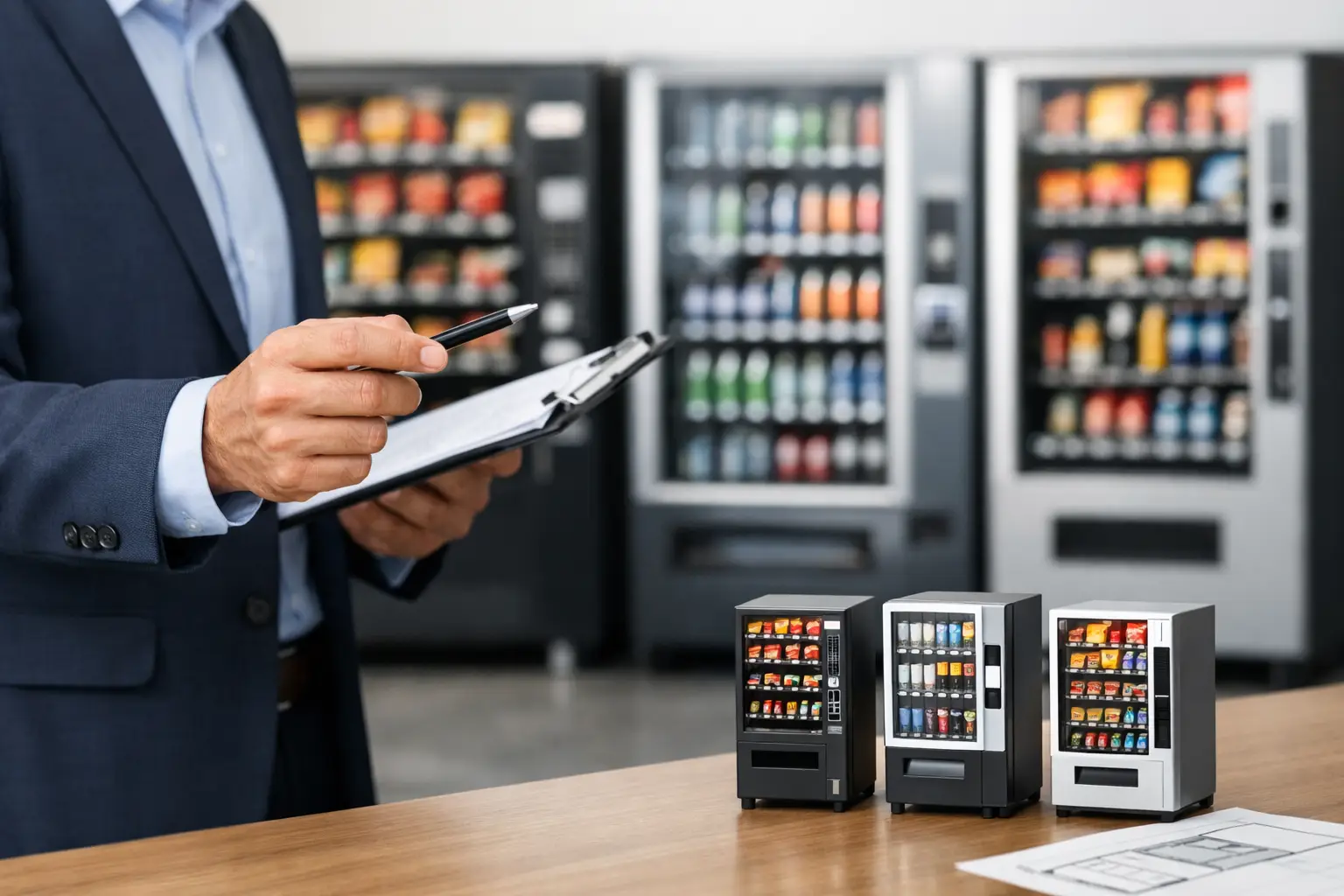
A vending machine can look like a straightforward purchase until it is placed in the wrong location, stocked with slow-moving products, or left without reliable technical support. Knowing how to choose vending machines starts with a commercial question, not a catalogue question: what will people at this site genuinely want to buy, and how will the machine earn consistently?
For a gym, that may mean protein drinks, water and healthy snacks. For an office, it could mean coffee, ready-to-eat meals and convenient payment options. In a residential development, frozen food or vending lockers may be more useful than a traditional snack machine. The right machine is the one that suits the site, customer behaviour and your ability to keep it stocked and operating.
Start with the location, not the machine
Footfall matters, but footfall alone does not guarantee sales. A busy shopping centre corridor may produce fewer purchases than a smaller office lobby where staff have limited access to food and drinks. Consider who passes the machine, how long they stay, what alternatives are nearby and when they are most likely to buy.
A location should also be practical to service. Check access for delivery, restocking and repairs, along with the available power supply, ventilation, lighting and floor space. A machine placed where customers cannot easily see the products or read the screen will underperform, even in a high-traffic area.
Think about the site’s trading pattern. A university canteen may be busy during term time but quieter during holidays. A factory operating night shifts may need drinks and food available around the clock. A condominium may favour everyday essentials and frozen meals in the evening. These details shape the product category, machine capacity and replenishment schedule.
How to choose vending machines by product category
The product you intend to sell determines much of the equipment specification. Do not buy a general-purpose machine and assume it will work equally well for every item. Product size, temperature requirements, shelf life and packaging all affect the choice.
Snacks and cold beverages
Snack and beverage machines remain a practical starting point for many first-time operators. They suit offices, gyms, schools, retail spaces and waiting areas because the products are familiar, easy to understand and relatively simple to replenish.
A combination machine can be a sensible option where space is limited or demand is still being tested. Separate snack and beverage machines may make better commercial sense at larger sites with strong, predictable footfall. Be realistic about capacity: a larger machine reduces restocking visits, but only if the location can support enough sales to justify the stock held inside.
Healthy food, hot food and frozen food
Food vending can produce stronger spend per transaction, but it requires tighter operational control. Healthy meals, sandwiches and chilled products need careful attention to temperature, expiry dates and stock rotation. Hot food machines require dependable heating systems and clear customer instructions. Frozen food machines need stable freezing performance and a product range that customers are willing to take home or prepare later.
These formats are particularly useful where food options are limited, such as industrial areas, hospitals, transport hubs, residential properties and late-night workplaces. However, they are not always the right first machine for a new operator. If you cannot replenish frequently and manage food quality carefully, drinks or packaged snacks may offer a more manageable start.
Coffee, specialist machines and lockers
Coffee machines can work well in offices, showrooms, colleges and commercial buildings where people want a quick, lower-cost alternative to a café. Their success depends on drink quality, ingredient management, cleaning routines and demand throughout the day.
Specialist options should solve a clear site need. Book vending machines can support education and promotional campaigns. Vending lockers suit collection, storage and product fulfilment. Custom-branded machines can strengthen a retailer’s presence or turn a product launch into a self-service sales point. The machine should add convenience for the user, not simply novelty for the owner.
Match capacity to your service plan
Capacity is not just a question of how many products fit in the machine. It affects cash tied up in stock, the number of site visits required and the risk of empty selections. A machine that is too small can lose sales when popular items sell out. One that is too large may hold slow-moving stock until it expires or loses its appeal.
Review expected sales by day and by product type. If a site experiences heavy lunchtime demand but little activity at other times, product layout matters as much as total capacity. Give popular items enough facings so they remain available during the busiest period.
It is also worth checking whether the machine can accommodate the actual packaging you plan to use. Bottles, cans, meal trays and unusual snack packs vary in size. A machine should be configured for your products, not force you into a limited range that does not suit your customers.
Make cashless payment a priority
Many customers now expect to pay by card, mobile wallet or contactless method. A cash-only machine can create unnecessary friction, particularly in offices, gyms, malls and younger customer environments. Cashless payment support gives customers choice and can help reduce missed sales when they are not carrying notes or coins.
That said, payment options should match the audience. In some locations, retaining coin and note acceptance alongside cashless payment may still be commercially worthwhile. Ask what payment hardware is included, which methods it supports, how transaction records are reported and what happens if there is a connection issue.
A touchscreen can also improve the buying experience for food, coffee and custom-branded concepts. It can display product information, guide customers through selections and create a more modern presentation. For a simple drinks machine, though, a touchscreen is not automatically essential. Spend on features that improve sales, usability or management rather than appearance alone.
Choose technology that reduces avoidable site visits
Remote monitoring is one of the most useful features for an operator managing machines across several locations. It can help you track stock levels, sales patterns, machine status and possible faults without travelling to every site simply to check the machine.
This information supports better decisions. You can identify fast-moving products, remove weak sellers, plan replenishment routes and respond sooner when a machine needs attention. Over time, sales data also helps you judge whether a location deserves a larger machine, a different product mix or a second unit.
Technology only adds value when it is supported properly. Before buying, ask how monitoring is set up, whether there are ongoing service charges, who can access the data and how quickly technical issues are handled. The objective is dependable operation, not a long list of features that no one uses.
Look beyond the purchase price
The cheapest machine can become the most expensive choice if breakdowns are frequent, spare parts are difficult to obtain or support is slow. Vending is an unattended retail business. When the machine is unavailable, sales stop and customers may not return.
Assess the full ownership picture: warranty coverage, installation, preventive maintenance, repair response, spare parts availability and technical support. Clarify what is covered by the warranty, what is chargeable after the warranty period and whether support is available for payment systems as well as the machine itself.
A supplier should also be able to discuss practical deployment, not merely provide a price. For first-time buyers especially, guidance on location suitability, machine selection, product fit and ongoing care can prevent costly mistakes. KCH Vending approaches vending as an operating business, with equipment and after-sales support working together to protect uptime.
Plan for profitability before placing an order
Estimate your monthly costs before committing. Include the machine payment or purchase cost, site rental or commission if applicable, stock, delivery, electricity, payment processing, servicing and labour for replenishment. Then compare these costs with a realistic sales forecast rather than an optimistic footfall estimate.
Start with a product range that is easy to understand and monitor. Track what sells by time, day and location. A premium coffee or meal machine may deliver better margins, but a well-managed cold beverage machine in the right place can produce more dependable returns with less operational complexity.
If you are testing a new site, choose equipment that gives room to learn. Monitor sales closely for the first few months, adjust the assortment and listen to customer requests. The strongest vending operations are built through small, evidence-based improvements, not a single perfect launch.
A good vending machine should make buying easy for customers and running the business easier for you. Choose the machine around the location, product demand and support available, then give it the attention needed to earn its place on site.