




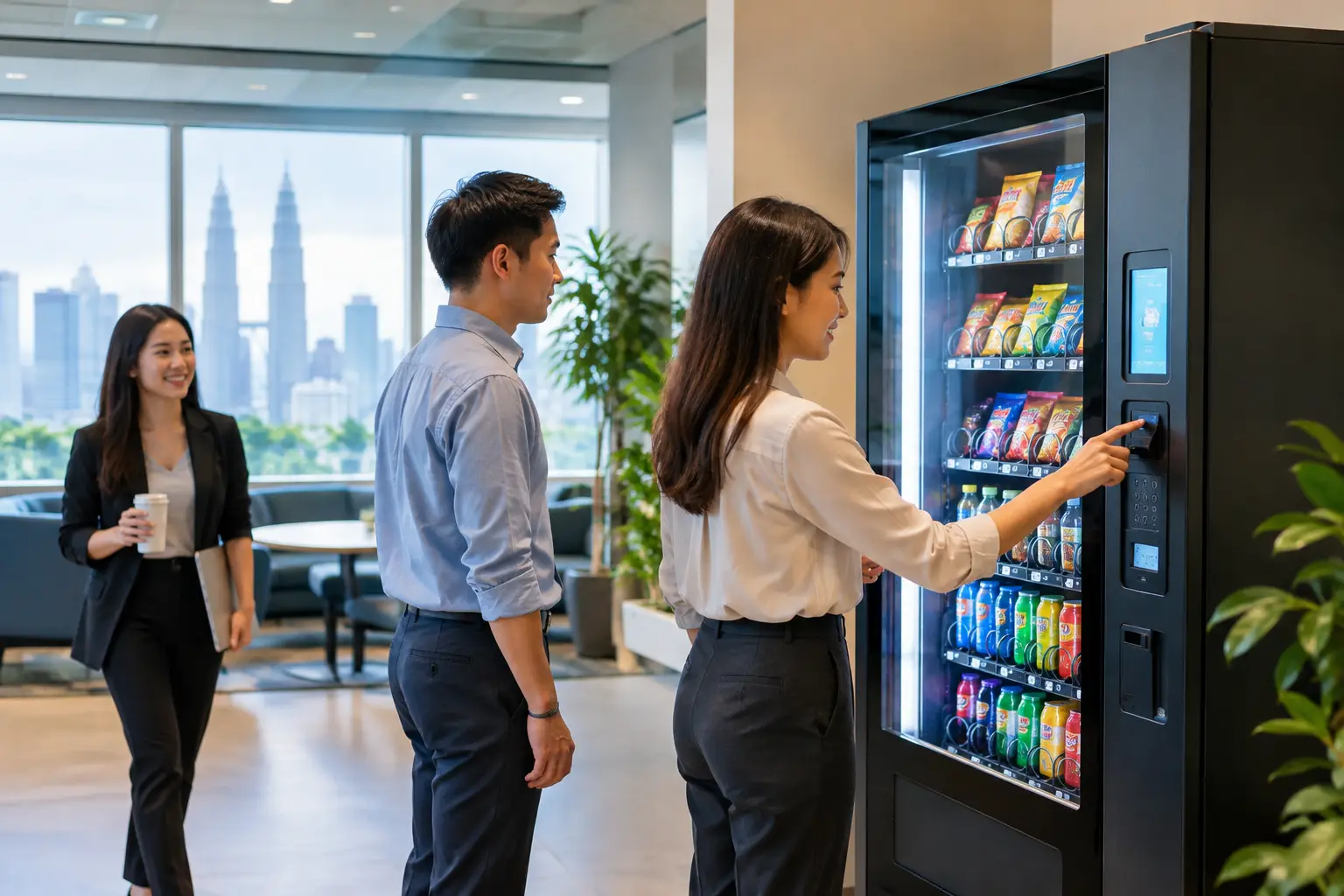
A vending machine placed beside a busy office pantry can become a dependable daily convenience. Put the wrong machine in a small, quiet workplace, however, and stock may move too slowly to justify the space, electricity and replenishment. The question of what vending machine suits offices is therefore not about finding the most feature-packed model. It is about matching the machine to employee numbers, working patterns, available space and the products people will genuinely buy.
For most offices, the strongest result comes from a practical mix of everyday refreshments, cashless payment and reliable support. A machine should reduce the need for staff to leave the building for a drink or quick snack while giving the operator a manageable, profitable self-service retail point.
What vending machine suits offices? Start with demand
Before choosing a category, look at how the office operates. An office with 20 people working standard hours has very different needs from a 300-person site with shift teams, visitors and late meetings. Headcount matters, but so do footfall and dwell time. A machine in a reception area used only by staff may sell less than one near a shared pantry, lift lobby or co-working floor.
Ask a few practical questions: How many people are on site on a normal weekday? Are there nearby shops or cafés? Do staff work late, overnight or at weekends? Is there a canteen, and does it close early? The answers reveal whether the site needs a simple drinks machine, a fuller snack and beverage offer, or food that can replace a missed meal.
It also helps to consider the office culture. A technology firm with younger teams may respond well to energy drinks, chilled coffee and healthier snacks. A corporate office with frequent client meetings may value bean-to-cup coffee more highly. A warehouse office or call centre with shift workers may generate stronger demand for substantial food outside normal meal hours.
The best machine types for office environments
Snack and beverage machines: the dependable starting point
For many offices, a combined snack and cold beverage machine is the most sensible first investment. It covers frequent, low-cost purchases: bottled water, canned drinks, biscuits, crisps, chocolate, nuts and simple ready-to-eat items. This format works particularly well in workplaces with 50 or more regular users, where a broad product range can turn over consistently.
The main advantage is choice without requiring several machines. Employees can make a quick purchase during a break, and operators can test product lines before committing to specialist equipment. The trade-off is that chilled drinks and snacks have different demand patterns. If the office already provides free drinks or has a well-used pantry, snack sales may be stronger than beverage sales. Stock selection should follow actual sales data, not assumptions.
Coffee machines: suited to high daily consumption
A coffee vending machine is a strong fit where employees buy hot drinks repeatedly throughout the day. Offices with meeting rooms, reception traffic and 40 or more regular staff can benefit from a machine offering coffee, tea, chocolate and speciality drink options. Bean-to-cup machines usually create a better perceived experience than basic instant coffee systems, which can support a higher selling price.
Coffee machines need more attention to cleaning, water supply and ingredient management than a standard snack machine. They are best chosen when the office can accommodate regular servicing and when drink quality is part of the experience. For a client-facing business, a good coffee machine can improve hospitality as well as create sales.
Healthy food and chilled food machines: for longer working days
Healthy food machines suit offices where employees expect lighter, more balanced choices. Think sandwiches, wraps, salads, yoghurt, protein drinks, fruit cups and lower-sugar snacks. They are particularly relevant for corporate campuses, gyms with office teams, co-working spaces and workplaces that promote staff wellbeing.
Fresh food can command better spend per transaction, but it requires careful stock rotation and temperature control. A machine is only profitable when the operator can replenish it frequently enough and remove products before expiry. It is not the best first choice for a low-footfall office, but it can be highly effective at larger sites where staff have limited time to leave for lunch.
Frozen and hot food machines: for shift-based workplaces
Frozen food and hot food vending machines are more specialised, but they solve a real problem in offices attached to factories, logistics facilities, service centres or operations running beyond regular hours. Employees working late shifts may have few nearby food options. A machine offering convenient meals can provide value when cafés and canteens are closed.
These machines require suitable power, sufficient space and a clear plan for replenishment. They are generally better for sites with reliable daily footfall than for a conventional small office. Where demand is uncertain, starting with snacks and drinks before expanding into meals reduces risk.
Cashless payment is no longer optional
An office vending machine must be easy to use at the moment of purchase. Employees increasingly expect card, contactless and e-wallet payment options, especially when they may not carry cash. A cashless-enabled machine reduces lost sales caused by a lack of change and gives the operator clearer transaction records.
For Malaysian workplaces, payment compatibility should be checked before installation. The machine should support the preferred cashless methods used by the office community, alongside cash payment if the location still needs it. A touchscreen can also improve product browsing, display promotions and make the machine easier for first-time users, although it should not be chosen purely for appearance.
Capacity, size and placement affect profitability
A larger machine is not automatically a better machine. High capacity is useful at a busy office tower, university-style campus or 24-hour operation, where frequent refilling may be impractical. In a smaller office, a compact machine with the right product range can achieve better stock turnover and waste less space.
Placement deserves the same attention as machine selection. The ideal location is visible, accessible and naturally passed by employees several times a day. Pantry entrances, break-out areas, reception zones, shared lobbies and waiting areas are often stronger than secluded corners. Avoid placing a machine where it blocks walkways, receives direct sun or is difficult for service staff to access.
Check practical site requirements before committing. This includes a suitable power point, floor strength, doorway dimensions for delivery, ventilation space and reliable mobile or internet connectivity where remote monitoring is used. These details prevent avoidable installation delays.
Remote monitoring and service support protect the investment
Vending is unattended retail, not maintenance-free retail. A machine can lose revenue when a product jams, a payment terminal goes offline or a cooling issue goes unnoticed. Remote monitoring helps operators track stock levels, sales patterns and machine alerts without visiting every location unnecessarily. That makes replenishment more efficient and allows fast action when an issue appears.
After-sales support is equally important, particularly for first-time vending investors. Before buying, ask what warranty is included, whether spare parts are available locally, how repair requests are handled and whether technicians cover the machine’s location. A lower-priced machine can become costly if support is slow or parts are difficult to obtain.
KCH Vending supports businesses with equipment selection, cashless payment options, remote-monitoring capability and ongoing maintenance support, helping office operators focus on sales rather than technical uncertainty.
Choose the machine around the office, not the catalogue
There is no single office vending machine that suits every site. A compact drinks and snack machine is often the safest choice for a standard workplace. Coffee machines work best where hot drinks are part of the daily routine, while chilled food, frozen food and hot food machines make more sense for larger teams, shift workers or locations with limited nearby dining.
Start with the behaviour already happening in the building: what people buy, when they take breaks and what they cannot easily access nearby. A well-placed, properly supported machine with the right products will usually outperform a larger machine chosen simply because it offers more options.