




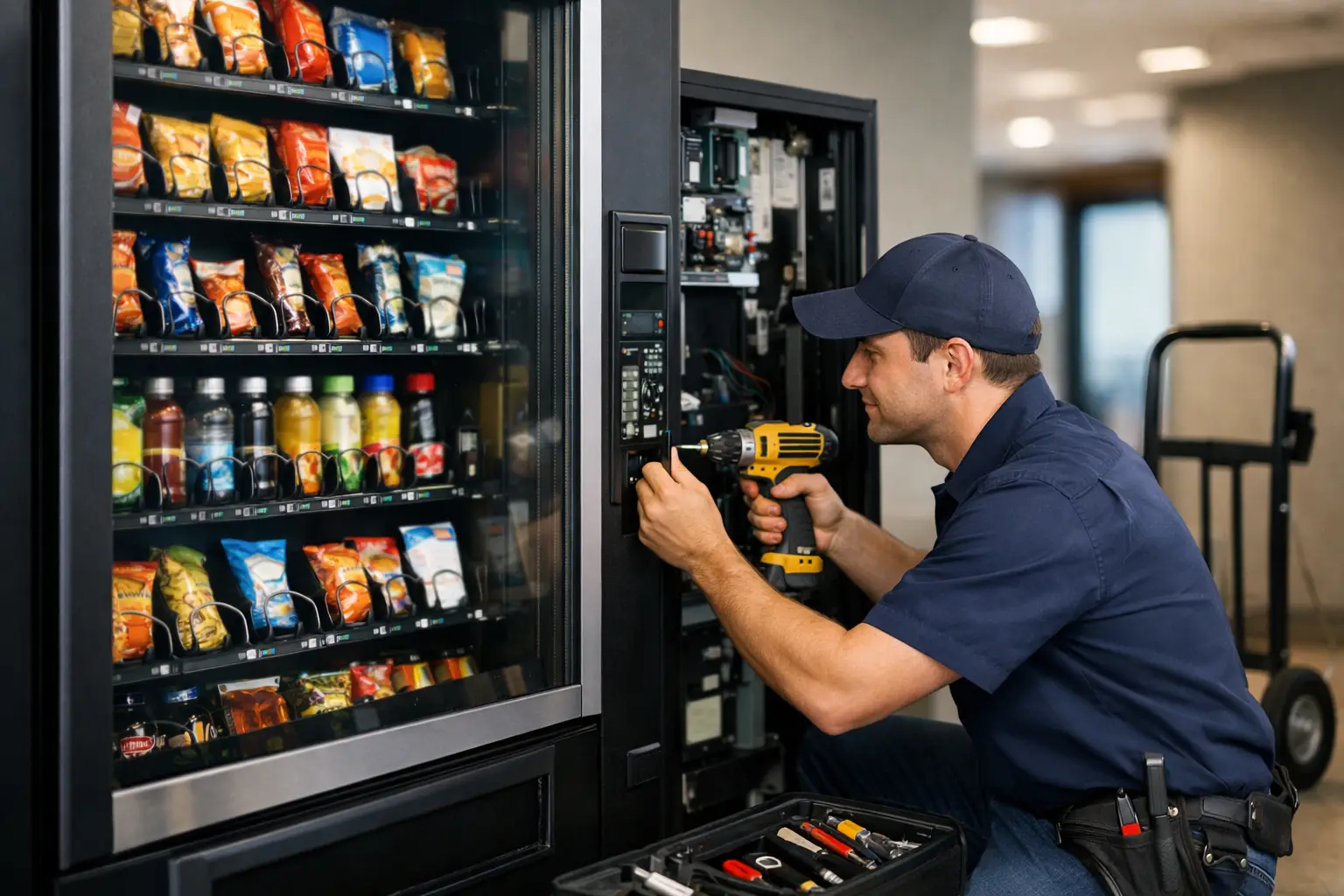
A vending machine can look ready to earn the moment it reaches the site. In practice, the decisions made before you install commercial vending machines determine whether they become a useful revenue channel or an underused piece of equipment. A machine in the right location, stocked for the people who pass it and supported properly, can serve customers around the clock without adding a staffed counter.
For property operators, business owners and first-time vending investors, installation is not just a delivery appointment. It is the point where product selection, payment technology, site access and ongoing maintenance come together. Getting those details right protects the machine, reduces downtime and gives the operation a stronger chance of producing consistent sales.
Start with the site, not the machine
The best machine is not always the largest or the most feature-packed model. It must suit the location and the buying behaviour of the people using it. A snack and cold drink machine may work well in an office, gym, college or transport waiting area. A fresh food, frozen food or hot food machine may be more suitable where customers need a meal outside normal trading hours. Coffee machines can perform strongly in workplaces, showrooms and service centres where visitors spend time waiting.
Before ordering equipment, assess footfall at different times of day. A site with 200 people passing through at lunchtime may be more valuable than a larger building with little dwell time. Consider who the users are, what they are likely to buy, whether nearby shops compete for the same spend, and whether the machine will be visible without blocking walkways or exits.
Location quality also depends on security. A well-lit, monitored area close to regular activity is normally better than an isolated corner. If the machine will operate late at night, building access and security arrangements need particular attention. The aim is convenience for genuine customers without creating unnecessary risk for the equipment or stock.
Check access before delivery day
Commercial vending machines are heavy, tall and not designed to be carried through unsuitable access routes. Measure doorways, lifts, corridors, turns and the final placement area before confirming delivery. Check ceiling heights where necessary, especially for machines being moved through service entrances or into lower-ground premises.
The route should be clear of loose flooring, sharp turns and obstacles. A level surface is essential once the machine is in position. Machines must not sit on unstable tiles, raised edges or sloping floors, as this can affect door alignment, refrigeration performance and safe operation.
Speak with the building manager early if the site is in a shopping mall, office tower, hospital or managed development. Many commercial properties have delivery windows, loading bay rules, lift bookings and contractor registration procedures. A missed access booking can turn a straightforward installation into a costly delay.
Prepare the utilities
Most vending machines require a dedicated and suitable electrical supply. The exact requirement depends on the machine type, particularly where refrigeration, heating or coffee-making equipment is involved. The socket should be positioned so the cable is protected and does not create a trip hazard. Avoid relying on extension leads or overloaded power strips.
Some specialist food and beverage machines may also need water supply, drainage or additional ventilation. Refrigerated and heated equipment needs adequate space around it for airflow. Placing a machine tightly against a wall or in direct sunlight can increase energy use and make temperature control more difficult.
If the machine will use cashless payment, verify mobile or Wi-Fi signal quality at the final location. Weak connectivity can interrupt card and e-wallet transactions, prevent remote updates and limit the value of monitoring tools. A site survey should test the signal where the machine will actually stand, not simply elsewhere in the building.
Choose payment options that match customer habits
Cash-only vending creates an unnecessary barrier in many commercial locations. Customers increasingly expect to pay by card, contactless wallet or QR-based payment. Cashless options can improve convenience, reduce cash handling and give operators clearer transaction records.
That does not mean cash should always be removed. In some schools, public areas or mixed-use sites, a combination of cash and cashless payment may serve the broadest audience. The right setup depends on customer behaviour, product pricing and the operator’s preference for handling coins and notes.
Touchscreen interfaces can also improve the customer experience where there is a wider product range, promotions, age-restricted purchase controls or nutritional information to display. However, a simpler machine may be the better commercial decision in a lower-volume location. Select technology because it serves the operation, not simply because it looks impressive.
Install commercial vending machines for daily operation
Once the machine is positioned, the work is not finished. It needs to be levelled, connected, configured and tested before customers use it. Each product selection should dispense correctly. Payment methods should be tested with real transactions where possible, and receipt or refund settings should be checked. Refrigerated machines need time to reach their required operating temperature before perishable stock is loaded.
Machine programming matters more than many new operators expect. Product names, prices, slot allocation and sold-out settings should be correct from day one. Place fast-moving products in easy-to-see selections and make prices clear. If the machine has a screen, use it to present simple, readable product information rather than filling it with unnecessary messages.
Stocking should reflect the site rather than personal preference. A gym may need protein drinks, water and healthier snacks. A factory or late-shift workplace may have demand for filling food, coffee and energy drinks. A family leisure venue may favour familiar snacks and cold beverages. Start with a balanced range, then use sales data to replace slow sellers with stronger options.
Build a servicing routine from the first week
Vending is unattended retail, not maintenance-free retail. Machines need regular cleaning, restocking and inspection to remain profitable. A dirty display, empty best-selling selection or repeated payment error will quickly discourage repeat purchases.
Set clear routines for stock rotation, expiry-date checks, cash collection where applicable and external cleaning. Keep records of popular products, sell-outs, refunds and reported faults. These details help identify whether a problem is caused by the machine, the site, pricing or the product mix.
Remote monitoring can make this work far more efficient. Connected systems can alert operators to low stock, temperature issues, payment interruptions and machine errors before a customer reports them. It does not replace physical visits, but it helps prioritise the visits that matter and reduces unnecessary travel between sites.
Reliable after-sales support is equally valuable. Parts availability, warranty coverage and access to technicians affect how long a machine remains out of service when an issue occurs. When comparing suppliers, ask what happens after installation: who handles faults, how quickly support is available, whether spare parts are stocked locally, and what training is provided for routine operation.
Avoid common installation mistakes
The most expensive errors are often avoidable. Installing a large machine in a low-footfall site can tie up capital without generating enough sales. Choosing products before understanding the customer base can lead to expired stock and poor turnover. Skipping signal checks may leave a card-enabled machine struggling to process payments at the point of sale.
Another common mistake is treating the machine as a standalone purchase. Commercial vending performs better when it is managed as part of the wider customer experience. A café may use a vending machine to sell bottled drinks after closing time. An office landlord may use it to add convenience for tenants. A gym may turn it into a practical extension of its nutrition offering. The commercial goal should shape the installation plan.
Make the first 90 days count
The first three months provide the most useful information about a new location. Review sales by product, day and time rather than relying only on total revenue. If cold drinks sell during afternoon peaks but snacks remain slow, adjust the product mix. If a machine has good footfall but weak conversion, review its visibility, price points and payment options.
Ask site staff for feedback too. They may know that a shift pattern has changed, a nearby retailer has opened or customers are asking for a specific product. Small changes to range, pricing or placement can improve results without replacing the machine.
A full-service supplier can make this process less daunting for new operators. KCH Vending supports commercial customers with equipment selection, cashless payment capability, remote monitoring options, installation guidance, maintenance and spare parts support. That practical backing is particularly useful when a machine is intended to become a long-term income stream rather than a one-off purchase.
The strongest vending installations are planned around real customer demand and supported after the machine is switched on. Choose the site carefully, prepare the utilities and access route, test every function, then keep responding to what sales data tells you. That is how a commercial vending machine earns its place on the premises.