




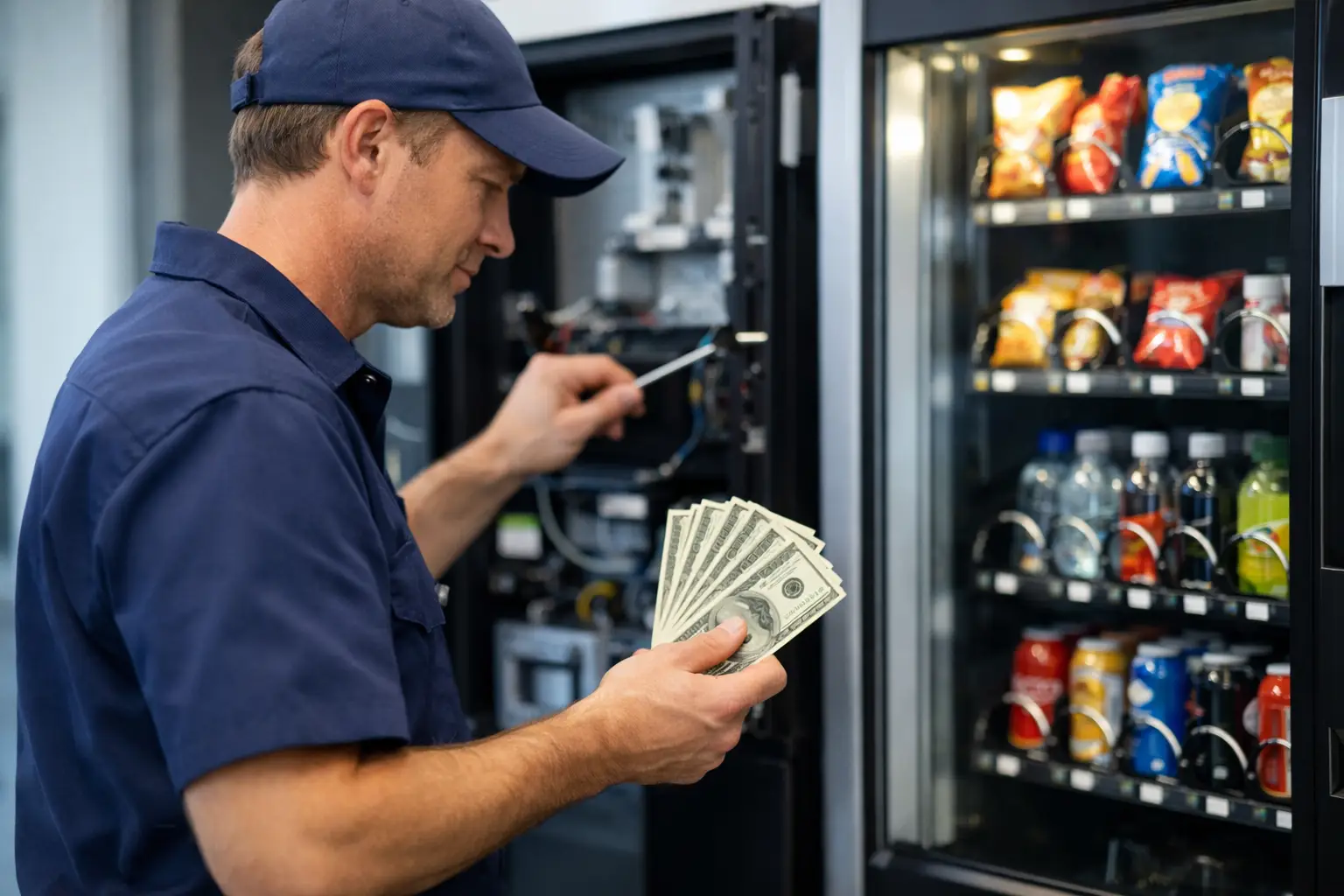
A vending machine that stops taking payments at lunchtime, dispenses the wrong product, or runs warm instead of cold does more than create a small inconvenience. It loses sales straight away, frustrates customers, and can damage confidence in the location. That is why a dependable vending machine maintenance service is not an add-on for serious operators. It is part of the business model.
For businesses placing machines in offices, gyms, retail sites, residential developments, hospitals, colleges, and transport hubs, uptime matters. Every hour a machine is partially working or completely out of service is revenue left behind. The real value of maintenance is not just fixing breakdowns. It is keeping your machine reliable enough to earn consistently.
Why vending machine maintenance service affects profit
Many buyers focus first on machine price, product range, or payment options. Those all matter, but long-term returns usually depend on what happens after installation. A machine with cashless payment, touchscreen controls, refrigeration, telemetry, and branded wraps is still only as profitable as its day-to-day performance.
When maintenance is slow or reactive, small faults become expensive ones. A sticky keypad can turn into abandoned purchases. A temperature issue can lead to spoiled stock. A door seal problem can increase power consumption. A coin mechanism fault can trigger repeated customer complaints, while a card reader issue can stop the highest-converting payment method altogether.
A proper maintenance service protects three things at once: sales, stock, and reputation. For commercial landlords and operators, it also protects the credibility of the self-service offering across the site.
What a good vending machine maintenance service should include
Not all support packages are equal. Some providers only step in when the machine has already failed. Others offer a more complete after-sales structure with preventive servicing, technical advice, spare parts support, and response planning. For most business owners, the second model is far more practical.
A strong service usually starts with fault diagnosis. That sounds basic, but fast and accurate diagnosis is what shortens downtime. If a technician can identify whether the problem sits in the payment system, cooling unit, dispensing motor, motherboard, or software settings, repair becomes quicker and less disruptive.
Preventive maintenance is just as important. Machines work in public and semi-public environments where dust, humidity, heavy use, and inconsistent cleaning can all affect performance. Regular checks help spot wear before it becomes failure. That may include inspecting refrigeration, checking motor performance, testing cashless systems, cleaning key components, reviewing sensors, and confirming the machine is vending correctly.
Spare parts availability also makes a major difference. A maintenance promise means little if essential parts are hard to source. Local access to common replacement items such as payment modules, motors, relays, boards, compressors, and door components reduces delays and keeps your operation moving.
For many operators, remote monitoring adds another practical layer. If the machine can report faults, low stock, payment issues, or temperature warnings early, support can be arranged before a site manager discovers the problem through a complaint.
Preventive maintenance vs emergency repair
Emergency repair is necessary, but it should not be the whole strategy. If your machine only receives attention when it stops working, you are managing downtime rather than preventing it.
Preventive maintenance is usually the better commercial choice for sites with regular traffic. It lowers the chance of sudden outages and helps preserve machine performance over time. This matters even more for machines with refrigeration, hot food functions, coffee systems, or more advanced touchscreen interfaces. These machines can generate strong returns, but they also benefit from more structured upkeep.
That said, not every site needs the same servicing schedule. A machine in a quiet office pantry may require a different maintenance approach from a machine in a busy shopping centre or university. Usage level, product type, payment mix, and operating hours all shape what sensible maintenance looks like.
Common issues that maintenance should catch early
Some machine faults appear dramatic. Others begin small and quietly reduce performance. A good service provider looks for both.
Payment failures are among the most urgent because they block sales immediately. If a machine accepts stock selections but rejects cards, e-wallets, or notes, customers often walk away rather than try again. Dispensing faults are another common issue. Products may hang up, spiral motors may misalign, or selection settings may not match the loaded items.
Cooling problems need quick attention, especially for drinks, dairy, fresh food, or frozen products. If temperature control drifts, stock quality becomes a business risk, not just a technical one. Lighting faults, screen issues, and sensor errors may seem less serious, but they affect user confidence and can make the machine appear neglected.
Door lock wear, seal damage, fan obstruction, and internal dirt build-up are also easy to underestimate. Left unchecked, these can lead to larger repair jobs and avoidable operating costs.
Choosing a service partner, not just a repair contact
If you are investing in vending for passive income or site convenience, maintenance should be part of supplier selection from the start. The right partner does more than sell equipment. They support the machine throughout its working life.
Look for clear after-sales coverage, realistic response times, and technical knowledge across different machine categories. Snack and beverage machines, coffee machines, frozen food vending, hot food vending, vending lockers, and micro market systems all have different maintenance demands. A supplier that understands those differences can give better advice on servicing intervals, likely wear points, and stock-related risks.
It also helps to work with a provider that can support cashless systems, remote monitoring, and software-linked functions rather than focusing only on mechanical repairs. Modern vending is not just about coils and compressors. It is also about payments, connectivity, and user interface reliability.
In Malaysia, local operational coverage matters too. Fast service is easier to promise than deliver if support is not truly local. Businesses generally benefit from a provider with an established service footprint, available parts, and practical experience handling real on-site conditions.
When maintenance planning should start
The best time to think about service is before the machine is installed, not after the first fault. During purchase planning, it is worth discussing who handles setup, what warranty applies, what faults are covered, how spare parts are supplied, and what the escalation process looks like if the machine goes down.
This is especially important for first-time buyers. New operators often focus on product selection and machine design but underestimate service planning. A well-placed machine can generate strong recurring sales, but only if support is already in place. Waiting until a breakdown happens usually means slower decisions, longer downtime, and more disruption than necessary.
For multi-site operators, a maintenance plan becomes even more valuable. Once you have several machines in different locations, ad hoc repairs become harder to coordinate. Structured service helps standardise response, budgeting, and reporting across the portfolio.
Vending machine maintenance service for growing businesses
As vending expands from a single machine to a broader unattended retail setup, maintenance becomes part of operational scaling. More machines mean more transactions, more site expectations, and more technical variables. Growth works better when service support grows with it.
This is where an end-to-end supplier can make a real difference. Instead of dealing separately with equipment sourcing, payment setup, spare parts, warranty support, and repairs, businesses can work with one provider that understands the full picture. For operators who want dependable performance without building an in-house technical team, that model is usually more efficient.
KCH Vending approaches support in exactly that practical way. The goal is not only to provide the machine, but to help customers keep it earning with responsive after-sales service, parts availability, and maintenance support that matches commercial use.
A vending machine should feel simple to the customer standing in front of it. Behind that simplicity is a lot of technical work that needs to stay reliable day after day. If you want your machine to generate income consistently, maintenance is not a background detail. It is one of the clearest drivers of long-term performance, and one of the smartest places to invest before problems start.